After being hand-picked by Taylor Swift to support her at Wembley Arena, the 20-year-old mutilates pop music from the margins with her unsettling exorcisms of womanhood.

“It is gore to be a woman”, attests SOFIA ISELLA. The viscera of the feminine experience – the perversity, ugliness and horror that lives beneath the skin – are laid before us unflinchingly in her music, like a gift of entrails on our doorstep. The first thing you hear on her new EP, “I’m camera.”, is the buzzing of flies. A suggestion of rot. “I wanted it to be disgusting and to feel alive,” she says.
The California-born, Los Angeles-based artist understands that a whisper close to the ear can inflict more violence than a scream; that pop is a Trojan horse for smuggling uncomfortable truths. The 20-year-old’s instincts have led her to be hand-selected by Taylor Swift to support her at Wembley Arena, but SOFIA ISELLA is here to disfigure the pop landscape from within.
She has always operated on the margins of convention. Classically trained on the violin since the age of three, she began filling notebooks with lyrics by the age of eight – and, in her own words, has been “a slut for words” since the very beginning. Being homeschooled for part of her childhood allowed her to develop a sense of what it means to be an outsider; to have lived within a system and then suspended herself above it, like an omniscient narrator.

Her 2024 debut EP “I Can Be Your Mother” could be called dystopian, if it weren’t holding up the mirror so faithfully to the reality of women’s existence in a system not designed for them. There are more parallels between SOFIA and Margaret Atwood, author of The Handmaid’s Tale, or the disillusionment of Sylvia Plath, than with any musical contemporary. ‘We are wife, whore, mistress, maid, mother’ – SOFIA declares on the warped, vaudevillian piano ditty “The Doll People” – ‘Oh, the beauty and the buyer, take the screaming one because / A woman who doesn’t want it is much hotter than the one that does’. One of its final lingering images is looking under the doll’s skirts and finding maggots.
The word ‘unsettling’ is often the first used to describe SOFIA. “How else would I act if not unsettling?” she asks. “Nothing else makes sense. I write about the disturbing aspects of womanhood – it wouldn’t make sense to act normal while singing it. The experience is abnormal, just extremely normalised. I enjoy being ugly. I’m very comfortable looking uncomfortable.”
“I’m camera.” turns its lens on corrosive masculinity and power; the interplay between disgust and desire. “I craved songs that had empathy for how men are shooting themselves in the foot with hard lines of masculinity,” she says. “[“Man Made”] was inspired by a man who was obsessed with manhood, and who went to the army to prove to himself how much of a man he is.” Her pen is poised to let blood with lines such as: ‘You begged for power, and power responded / You got the worst thing of all, everything you fucking wanted.’

The EP is written from the perspective of “The Muse” – a being from whom these words and stories pour forth. In the opening track, she is clothed in black egg whites with hair to the floor, heavy with water; a shadow who mimics herself, but slightly wrong. The cover art reflects this: SOFIA facing a supernatural distortion of herself too great to be fully captured. “It’s myself and myself,” she says. “Me with me, with I – looking at you.”
For “The Muse”, she is merely a vessel. Everything is from The Muse’s perspective – the backbone to both EPs, which are sisters. “She is the creative charge in my body, and I am camera, capturing her. I am watching myself, like a self-absorbed babysitter.” Narratively, it’s the second piece of an ongoing puzzle. “Because I gave birth to myself,” she says. “Visually, Mother is the concept of pregnancy, and Camera is the birth of the creative.”
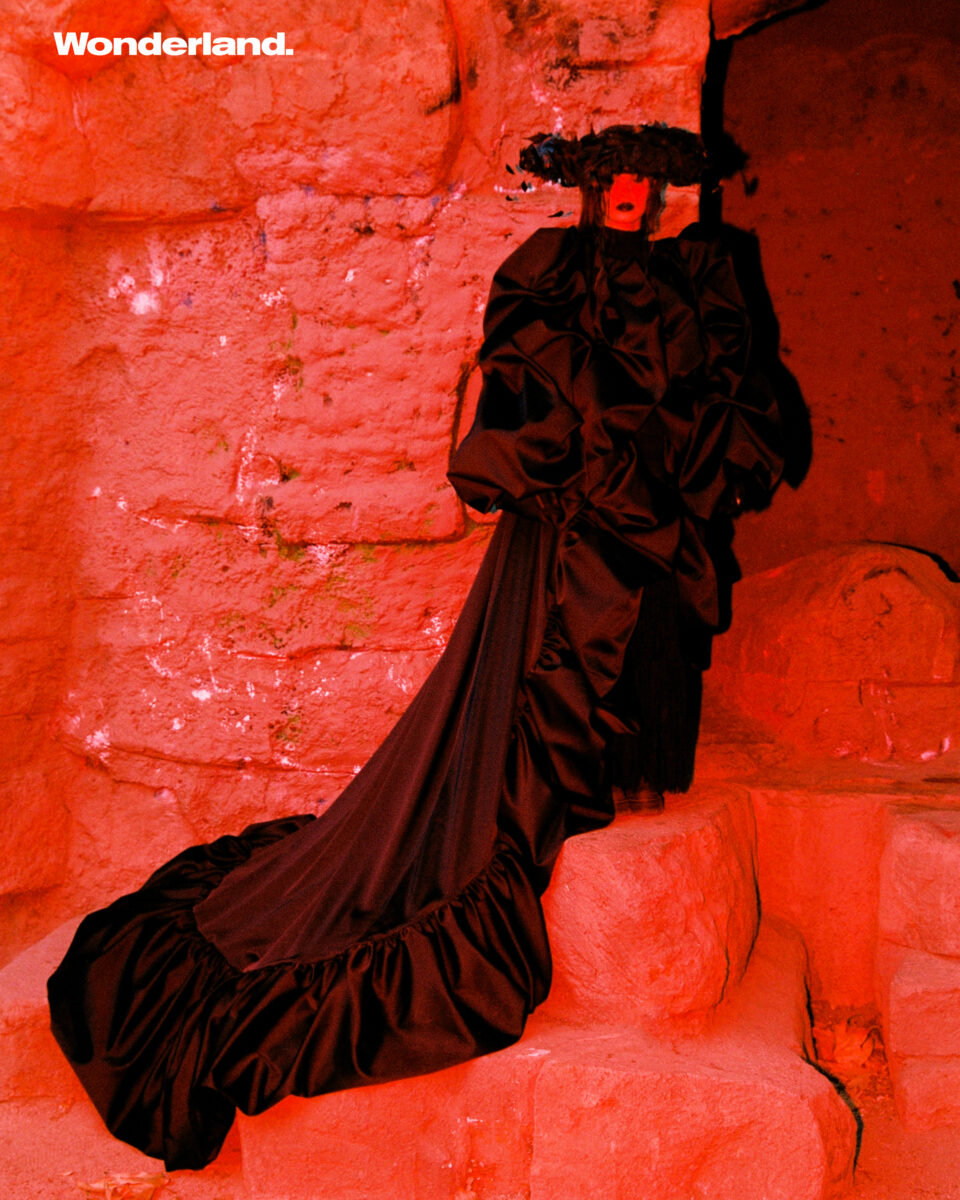
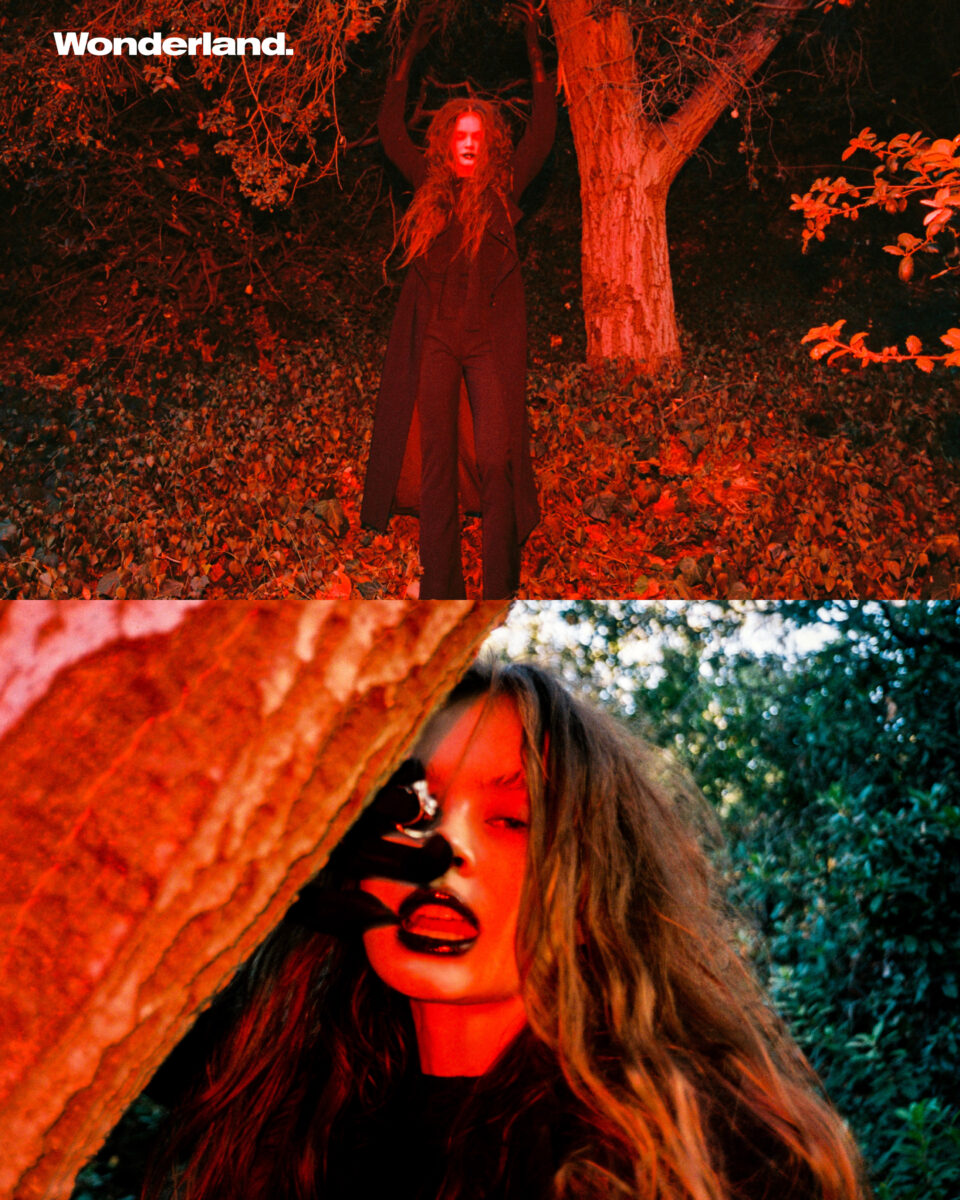
There is something voyeuristic about SOFIA’s songwriting because she writes with the viewer in mind. Her imagery – both written and filmed – lands with visceral effect, like digging fingernails under scabs that feel as sharp as your own. She’s the camera, but you are always in the shot. “I always think of a room stuffed with bodies while I write and produce it. I couldn’t tell you what I like until I’ve imagined it. I speak a lot on the disturbing aspects of the visuals – but personally, I don’t find them disturbing. I just find them interesting. I recognise that’s seen as disturbing,” she says, “but I’m so used to it that it just feels like myself.”
When asked how she defines success, her answer comes without pause: “To see my music sung back to me in a crowd.” After selling out her Electric Ballroom show earlier this summer, her performances – like her songs – are communal, near-religious experiences where young women are recognised not for the roles they perform but for their own sake. The fourth wall SOFIA ISELLA shatters has awoken the doll people from their slumber, with delicate whispers and bellowing strength; plainspoken truth and painstaking poetry. At 20-years-old, with her rare combination of clarity and instinct, the possibilities of her art feel limitless.

Photography by Sarah Pardini
Styling by Kaitlyn Vitug
Interview by Beatrice Hazlehurst
Hair by Nathan Unce
Make-up by Shea Hardy at Wildflowers Agency
On-Set Producer Gina Hammo
Fashion Assistant Akshrithi Lumaresan
Videography by Jordan Kirk


