The NYC-based designer famed for taking the big city by storm in the ’90s documents her career-defining decade in her newly published book.

It’s a late Tuesday afternoon in the thick of London winter. Running behind through the darkened streets of Soho, and hopping on the delayed Victoria line which does nothing to calm my lateness anxiety, I open Instagram to flick through a post chronicling the friendship between the emblematic New York designers, Anna Sui and Marc Jacobs. Fitting, as I’m about to meet the former, at the latter’s BOOKMARC takeover at The Standard.
Jacob’s cult-favourite literary destination has found a temporary home at The Standard for the past few months. Boasting a curation of fashion and culture-focused books that would make any of your tapped-in friends’ Christmas were they to find one wrapped under their tree, the six-month residency became the place to be for the artsy London scene. With signings, talks, and an unbeatable, low-lit atmosphere, the King’s Cross hotel hosted the likes of fashion photographer and filmmaker Pamela Hanson, hairstylist to the stars Sam McKnight, and of course, Sui.
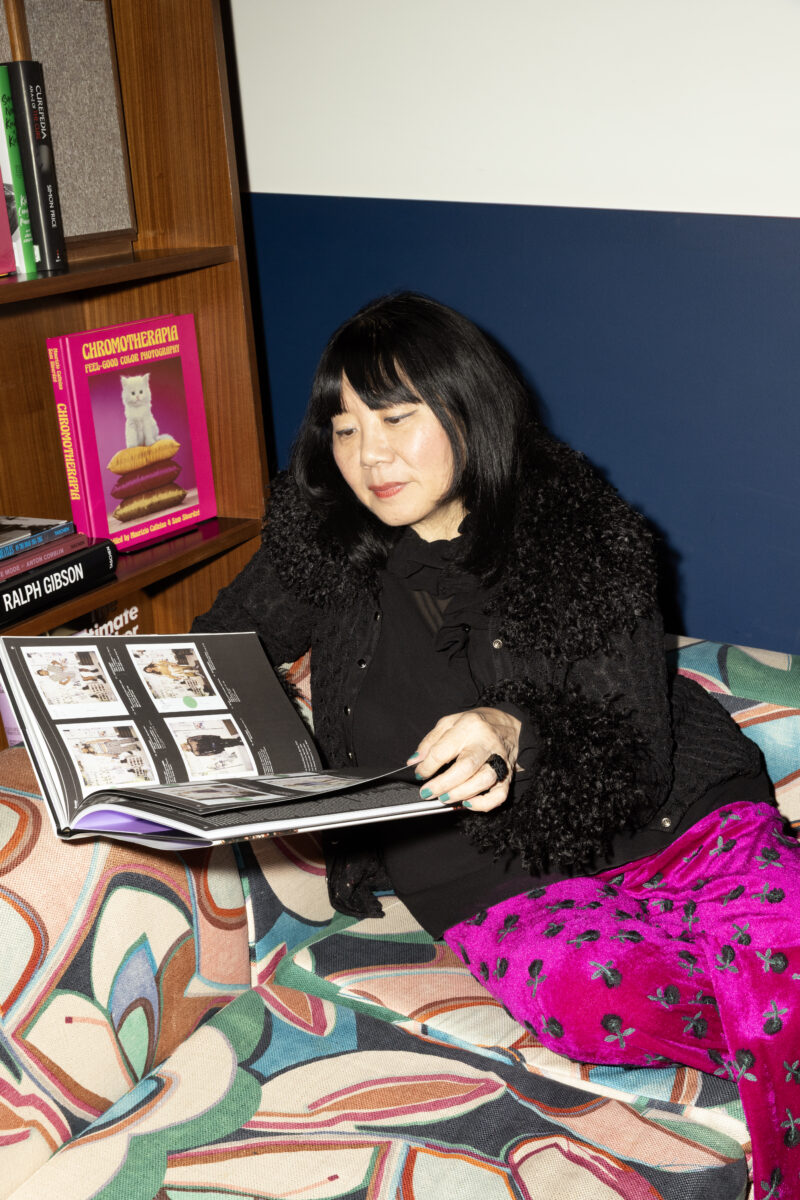
As soon as I stepped into the cosy-chic Library Lounge, all my nerves were alleviated. Greeted by a glass of champagne and a smell of some bougie incense or other, I spot the American fashion designer, lounging on a leather two-seater surrounded by her entourage. Displayed on a nearby shelf, is her newly-published Rizzoli book The Nineties – a 176-page publication containing photographs, interviews, press clippings, and even show invites, all documenting her career-defining decade.
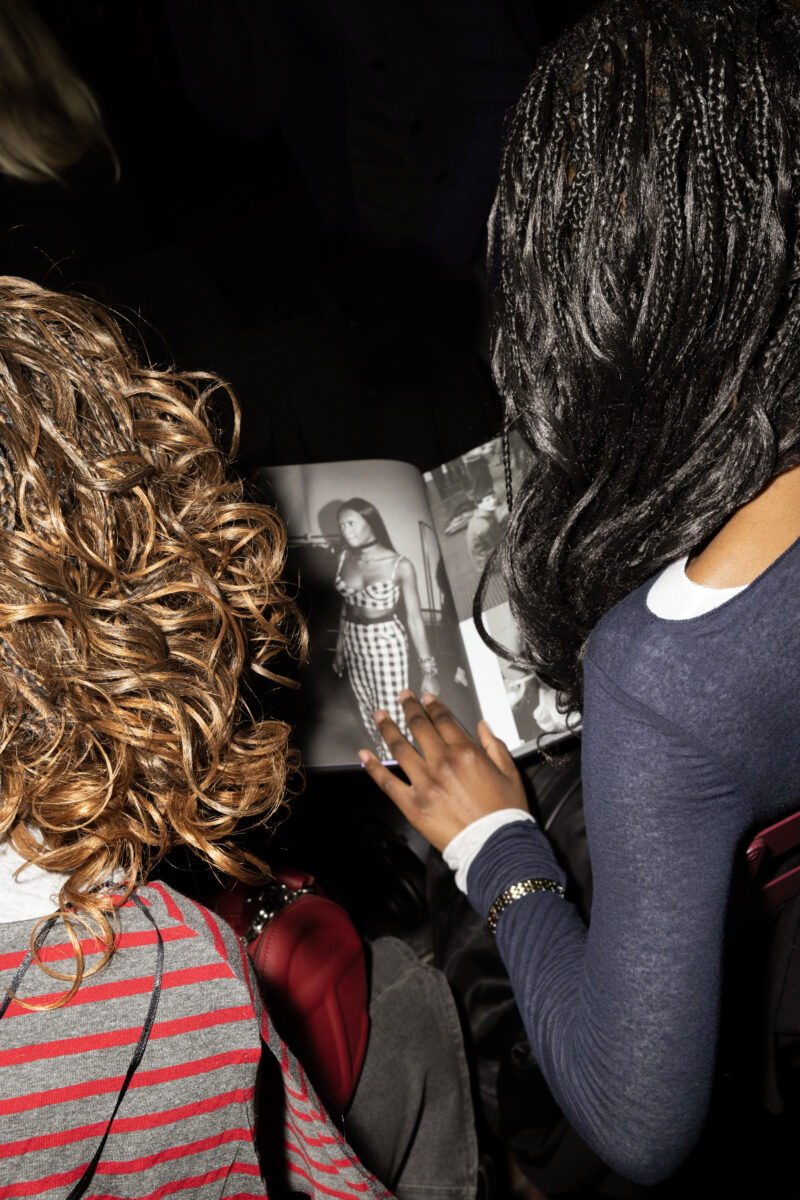
Flip through The Nineties and you’ll find the babydoll and slip dress, as seen captured on Madonna and Courtney Love, immortalised as an emblem of the Anna Sui brand. Runway clippings of Naomi Campbell and Christy Turnlington find themselves some few pages away from yarn and wool fabric swatches that became key to Sui’s design sensibilities. And past and present words from industry titans tie the visual story together, cementing Sui’s status as an era-defining designer.
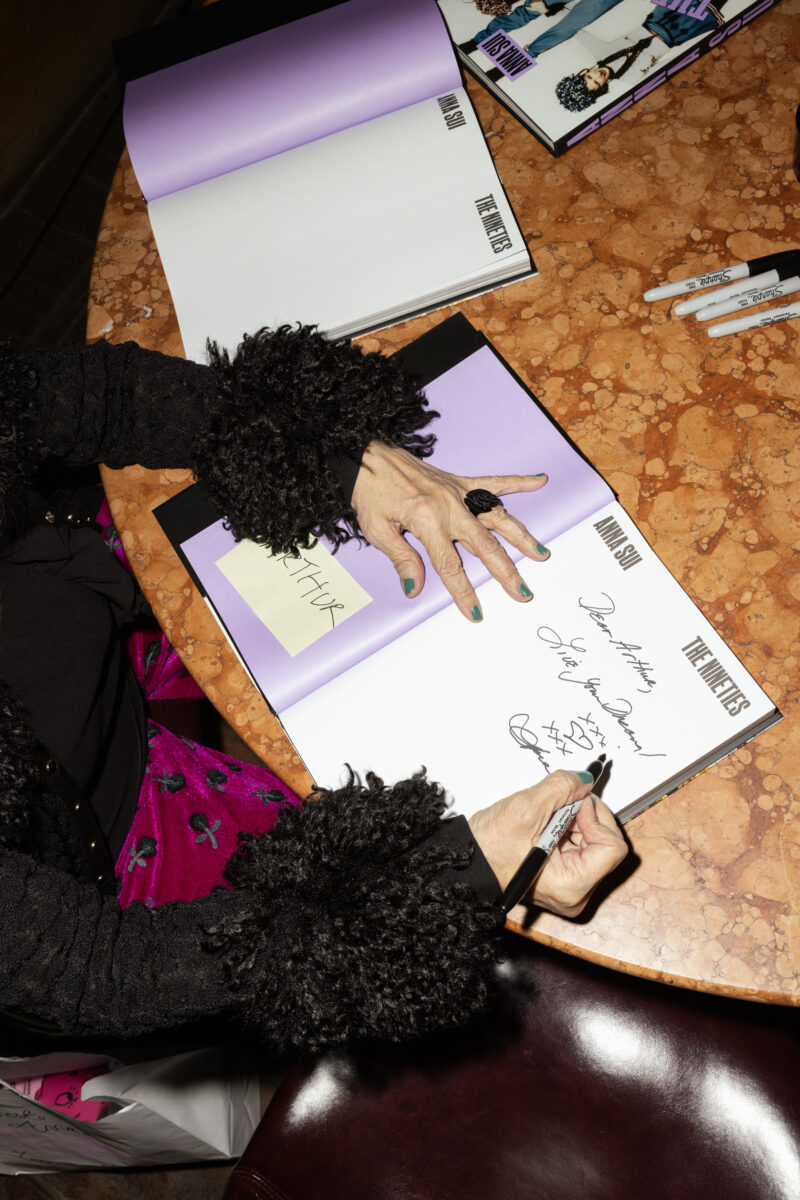
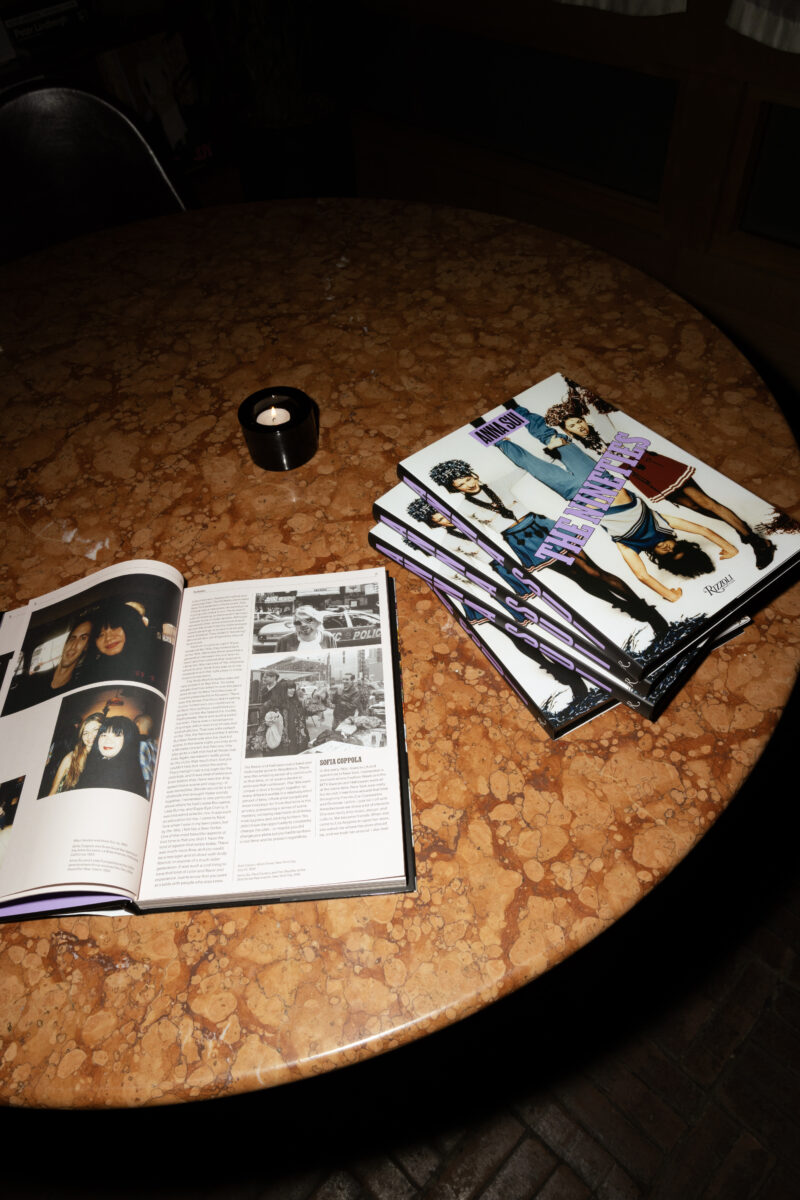
Ahead of her talk with the Head of Exhibitions at Fashion and Textile Museum Dennis Nothdruft – in which anecdotes of tight-knit, now-famous friends such as the ’90s supermodels, chart-topping indie band frontmen, and the Coppolas were exchanged, and talks of alleged creative directorship offers were recounted. Sui and myself were ushered to an intimate corner of the Library Lounge to chat about her new book, over a burning patchouli candle. Below is the conversation that ensued.
Why were the ’90s the focus decade for this book?
I think that the ’90s has been such a topic lately, because there was that big [The] New York Times article, [Why Are We Doomed to Keep Reliving the ’90s?]. They just don’t go away. I think that that was such an important part of my career, because that was [when I presented] my first shows. That was my first segue into this whole world. I got my perfume license, my cosmetics license. It’s really when fashion went so global. It was a really exciting moment.
But I also think that it was a kind of a seismic change in fashion where there was a whole new regime of designers, and the clothes were more for that generation. I think that the models really felt that this is the first time they were wearing clothes that weren’t mummy’s clothes, but that they were clothes that suited their lifestyle. And they loved them. [It was] what they were looking for. [It] wasn’t just an outfit to wear for the show. So it was really fortunate that I came along during that period.
There was also this huge change in the arts – where music and film suddenly switched, and everything was alternative. There were independent producers, independent filmmakers, independent record companies. It wasn’t being dictated by the big machine anymore. You know, music was coming out of Seattle. People were making films [with] low budgets, and breaking through and really shaking up the whole industry. And I think the same thing sort of happened with fashion, where people were looking for that new energy. New York, especially, became a focal point for international fashion. Every journalist and every buyer from all over the world was coming to New York.
Sofia Coppola, who is on the cover of your book, was also starting out experimenting with filmmaking in the ’90s. What was her reaction when you told her she was on the cover?
She was doing a clothing line back then too for Japan. So we saw each other quite a bit, either in New York or Japan. She came to my show because Donovan [Leitch] was modeling, and she and Zoe [Cassavetes] came, and then we just all started hanging out. I went out to LA, and they convinced me to open a store there, so I started spending more time out in LA. It was just kind of a natural segue when Ellen von Unwerth said “I want you to round up your friends, like, who should we photograph?” And Ellen thought of dressing the three of them together [in] my collection where I had cheerleader clothes. Who knew Roman [Coppola] could do a handstand?

You were first handing out the book during your latest New York Fashion Week show. How were people reacting when they saw in the flesh for the first time?
It was kind of frantic because after the show, you know, there’s so many people that come backstage. Some people wanted me to sign the book, but there were too many people waiting.
Now it is launching here, in London, in what I hope is a less frantic environment. It’s such a lovely full-circle moment, with BOOKMARC’s takeover with The Standard, and obviously you and Marc Jacobs are two friends and designers that took New York by storm around the same time.
I think he really loved [the book]. And plus, he spoke a lot in the book too. He’s one of the people that was interviewed. [During the ’90s] that’s when I first got to be really friendly with him, because we found ourselves in this situation where we were together all the time, socially and at events. We just started [being] like “let’s go together, instead of standing there, not knowing anybody.” Marc’s not that way. [He’s] very comforting to have a pal like that.
What do you want your readers to take away from this book?
I think what you’ll come away with from the book is realizing how intimate and genuine that period was. It’s pre internet, so everything was word of mouth. Everything was organic. It wasn’t paid influencers. It wasn’t people being hired to sit in the front row. It was like so-and-so is dating so-and-so, can they come and come to the show? Even backstage was the same way. You can see it in the book as well, how chill the backstage was, and how there weren’t thousands of journalists and people back there. It was just us and our friends. And sometimes they would bring their boyfriends. It was just a communal event. It was not what it became.
It was so genuine. I think that’s why people are so attracted to the 90s
Words by Juliette Eleuterio


