From Instagram feeds to runway shows, the Napoleon jacket has returned, militaristic, maximalist, and theatrical. Once a staple of rock stars and London boutiques, it’s now Gen Z’s statement piece, proving that some trends never really die.

After what felt like a minute but was probably closer to an hour in the depths of Vinted, I saved over ten different Napoleon jackets, for every budget, and convinced myself that this time, somehow, the trendy historical garment was absolutely essential to my wardrobe. Then I drifted back to Instagram and immediately saw @dalstonsuperstoned, Gen Z’s favourite account, post: “Wearing a Napoleon jacket today is like wearing a blazer to the club.” Nothing like social media to remind us that we are painfully predictable.
I usually try to stay far away from trends, not because I’m trying to prove I’m not like the other girls, but because I know myself: in six months, I won’t wear whatever trend is hot today. It will sit in my closet collecting dust, or end up back in a charity shop, where someone else will convince themselves they’re making a timeless purchase. Working in fashion complicates this further; fast moving trends feel like actively choosing endless consumption, even when shopping secondhand.
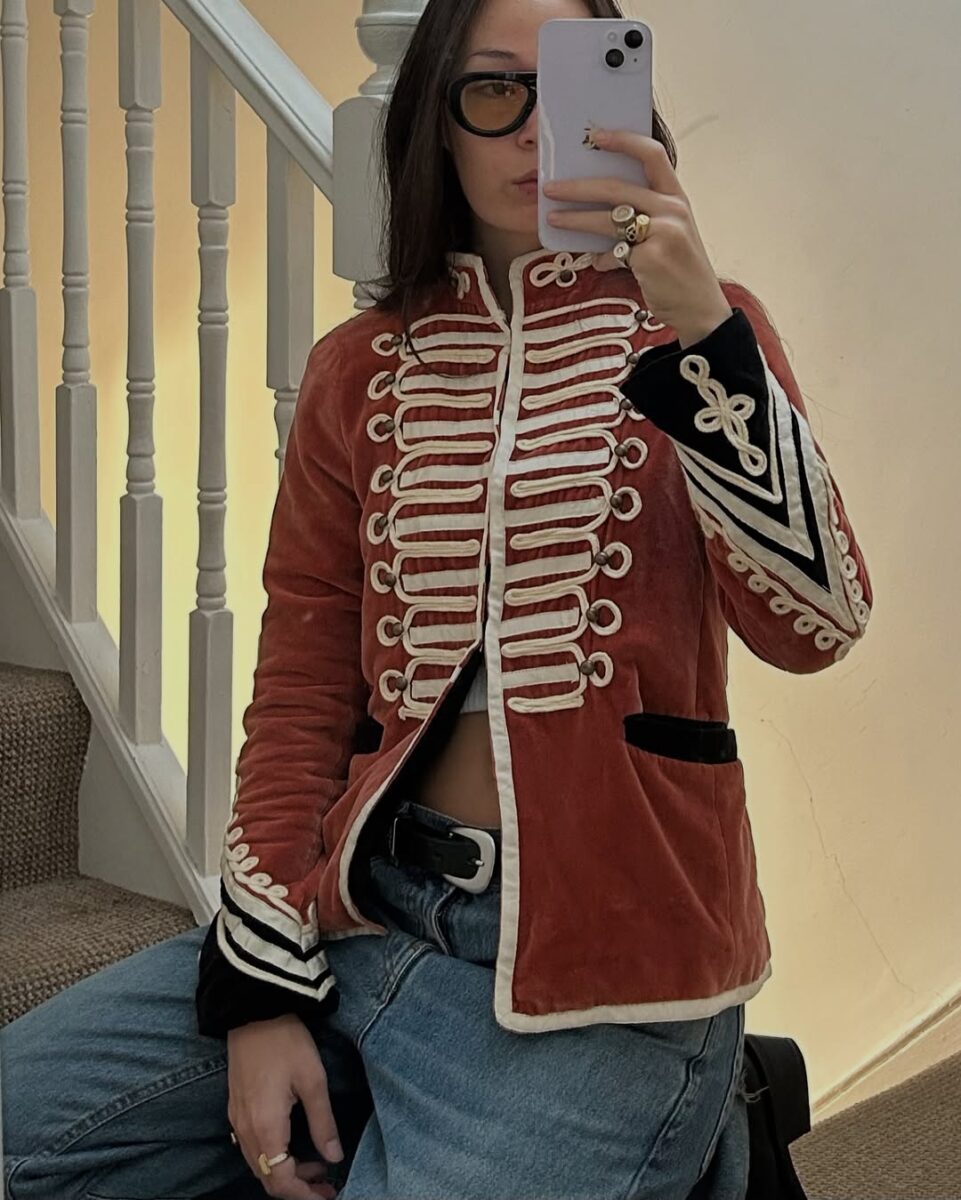
And yet, the Napoleon jacket is very tempting. The style has inundated my FYP, the runways, and Stoke Newington Road every Friday. Military uniforms make sense now that irony is (finally) wearing thin. Theatrical and slightly absurd, the tailored silhouette often paired with decorative braiding, feels right for uncertain political times, when personal expression becomes more indulgent and maximalist. Mahalia Chang, style editor at GQ, agrees: “I can’t speak for anyone else, but to me, I love anything that’s a bit costume-y. Napoleon jackets are right up that alley… Buying fast fashion to jump on a trend is different to shopping second-hand or DIY-ing, in my eyes. I have been having a lot of fun wearing them.”
The jackets themselves are cultural heirlooms: from Lord Kitchener’s Valet, a 1960s London boutique that sold antique military jackets to rockstars, to Pete Doherty who later made it his signature, and Aaron Esh’s crew today. What starts in the streets and second hand shops often lands on the runway, Alexander McQueen and Ann Demeulemeester both featured Napoleon-inspired tailoring in SS26, cementing the jacket’s presence from street to catwalk. “Fashion houses inform style. Style informs fashion houses,” Chang notes. “That’s the way it’s always been… what’s the point if there’s a list of things they can and can’t choose from, based off something as arbitrary as social media popularity?”
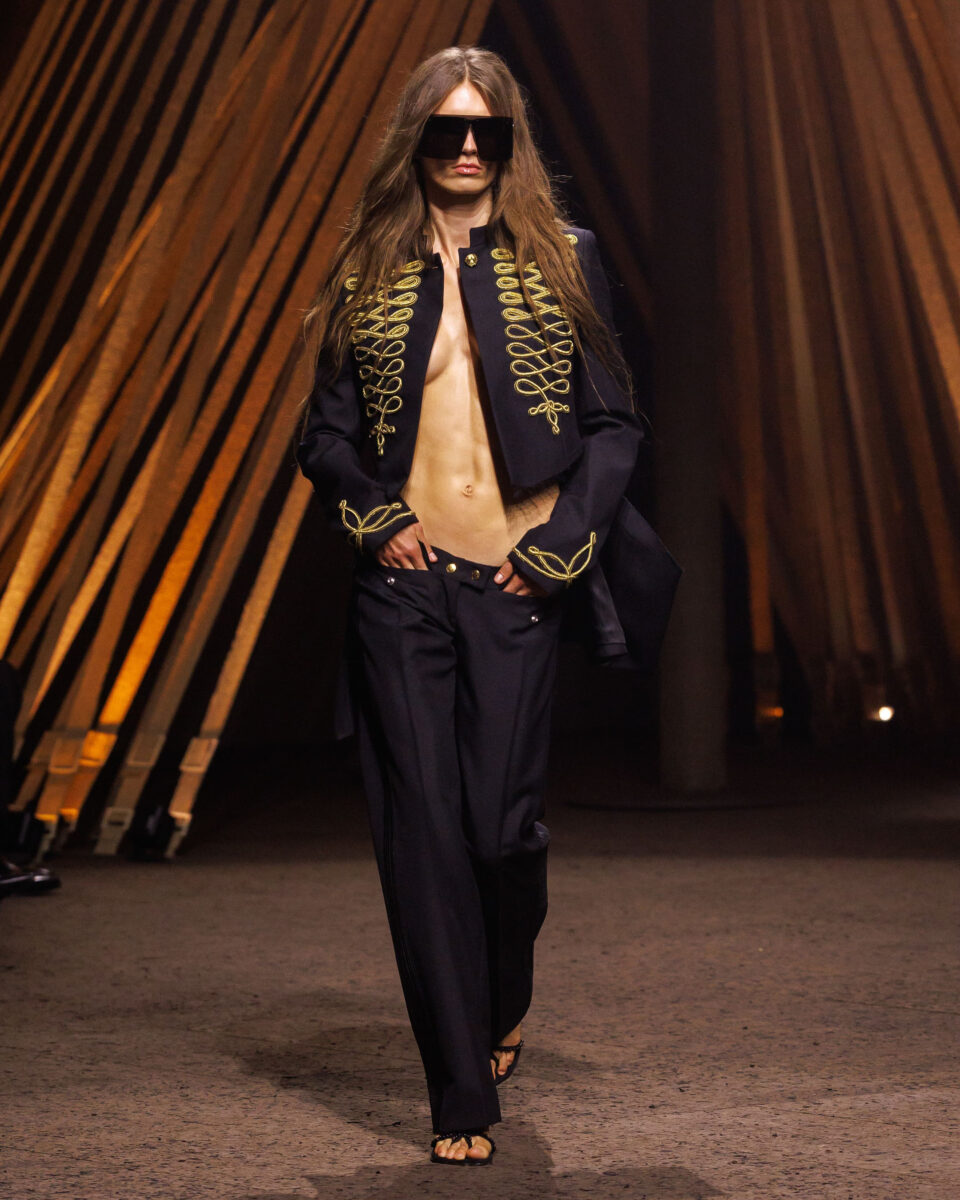
The appeal is obvious: playful, intricate, maximal, but there’s weight too. Militaristic silhouettes carry notions of authority and hierarchy, and their revival comes amid a global rise in right-wing sentiment. These jackets originally worn by the French general in the 19th century are historical symbols of power, flattened and reused as aesthetic fun, but the context of authority lingers. Matthew Donovan, writer and host of the Neoliberal Hell podcast observes that reusing symbols “as fun, aesthetic bits rather than political statements” is nothing new: camouflage, combat boots, and military jackets have long walked that line. Is it more about aesthetic irony, nostalgia, or something else? Donovan answers, “All of the above. There is the serious version, and there’s clothes as contrarian signal: the queer kid announcing ‘coloniser realness.’”
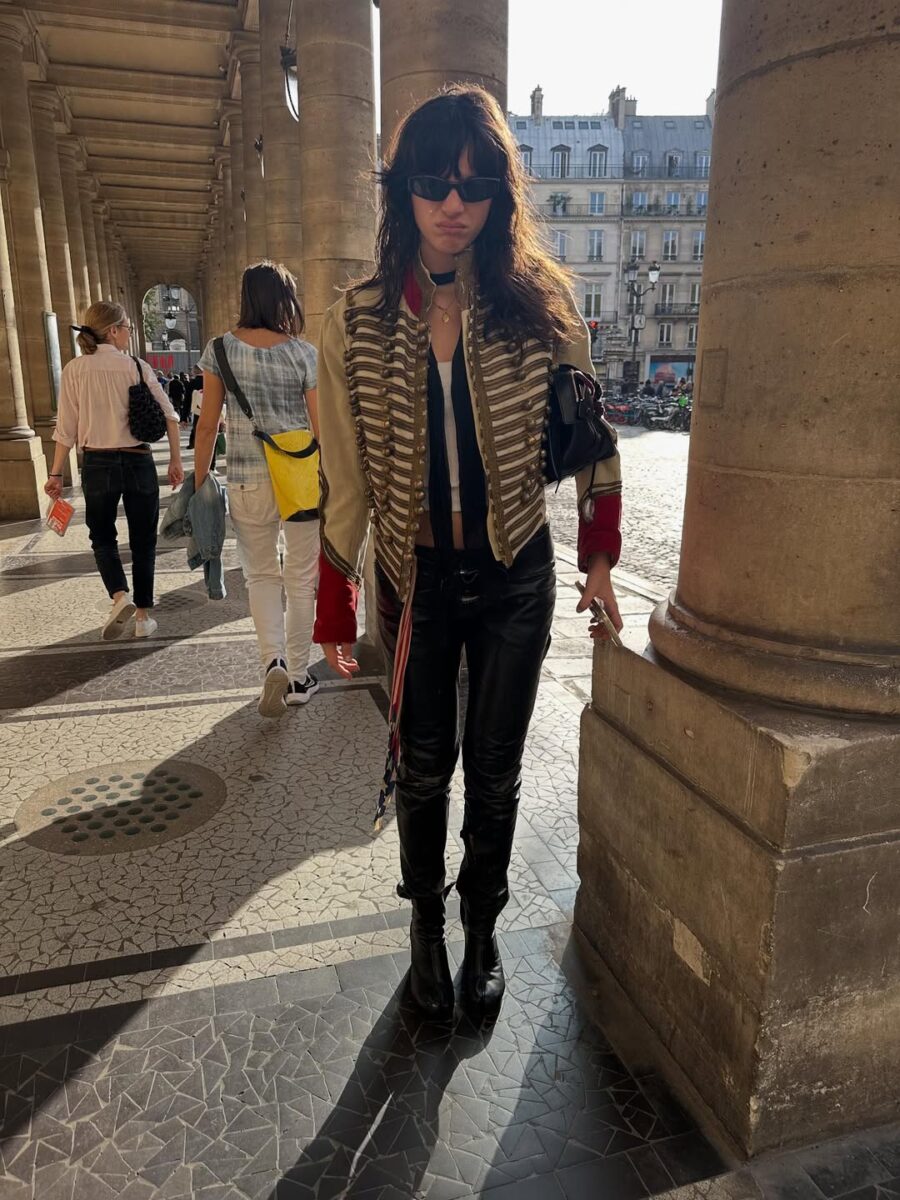
So is it too late, or just in time, to adapt the style Kate Moss once rocked? Napoleon jackets have moved fast: first on the streets, then Instagram feeds and finally on the runway. “I find social media exposing and kind of embarrassing in general, but I don’t think being current or trendy is a bad thing,” says Chang. “I think the focus should be how we lock onto trends, not whether or not we’re allowed to.”
It isn’t early or late; it’s here for whoever wants to make it theirs. And as I scroll through Vinted for the third time this week, I’m still deciding if that’s me.
Words – Moira González


