No, it’s not just you. From it-girls to up-and-coming chefs, the French city of Marseille seemed to be everyone’s favourite destination in the summer of 2025. The natural question, of course, is: why?
It’s a late summer evening in Marseille, and all those drinking in the Cours Julien square do so under a streaked purple sky as vivid as the graffiti of the winding streets below.
Something of a Marseille Hackney or Brooklyn, the scene is dominated by young people – predominantly Parisian creatives, with a considerable number of Europeans, too. There is no rush to the scene’s steady rhythm. Wine flows, beers are thrown back, and the sound of excited conversations is soundtracked by a lively jazz band.
“I’ve heard all you Parisians are moving to Marseille,” I said to our new friend Louis, a twenty-something filmmaker. He started off as our waiter and immediately joined us after his shift, summoning his mates with more haste than he ever applied to our orders. (We can file this under European things the American mind could not comprehend.)
“Yes,” he says, grinning. Why? I ask, admittedly feeling a bit stupid doing so. For after just five days in the city, the more appropriate question would’ve been for him to ask me: well, why aren’t you?
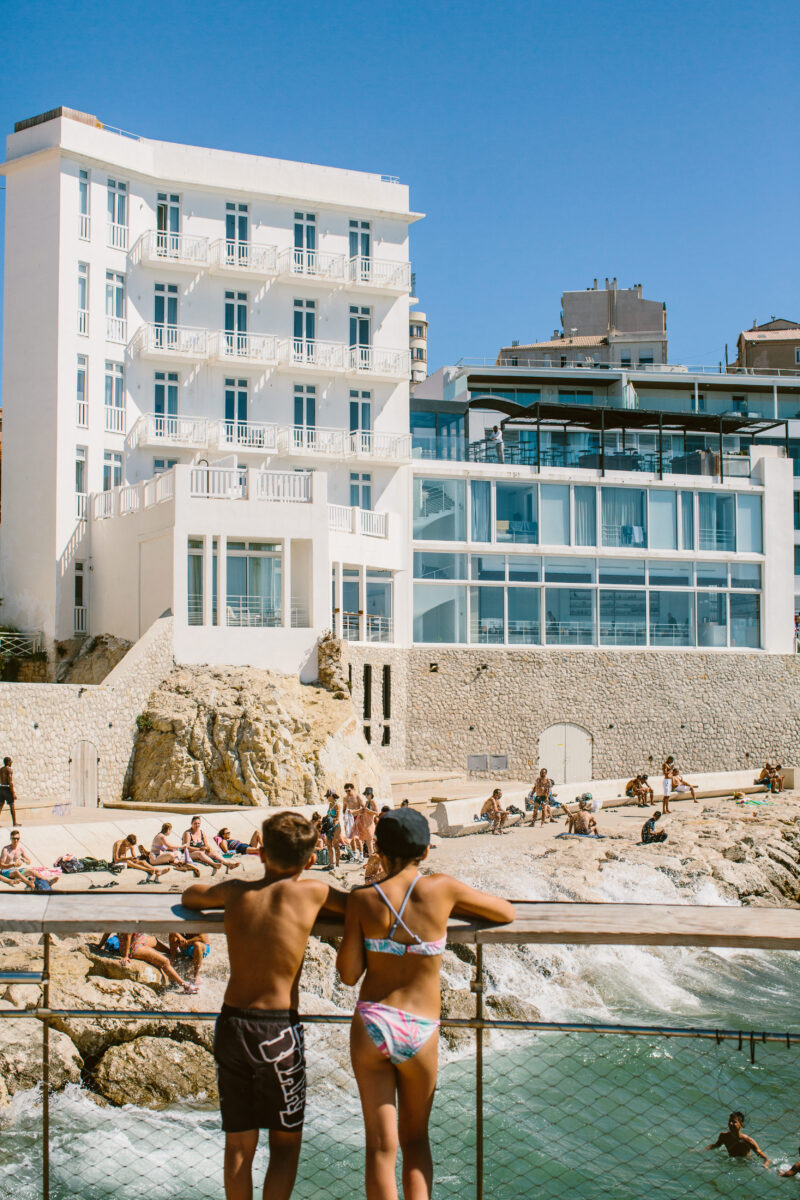
Because it’s not just your Instagram algorithm. For the past few years, Marseille has increased in popularity not just as a summer destination for the international hip scene, but as a new home for Gen Z bohemians, too. The colourful streets and squares of Cours Julien are simply rammed with young people. At night, outdoor bar tables heave with merry drinking, and dancing bodies clutching cigarettes spill out of clubs and onto ancient, lamp-lit streets. During the day, tanned, tattooed limbs sunbathe on the rocks and swim in the Mediterranean Sea, which gently laps beside them. Gen Z has claimed this port city as its own in much the same way the Jazz Age took to Antibes and the Swinging Sixties dominated St Tropez.
Like all buzzing destinations, it wasn’t always like this. Just a few years ago, it carried a reputation for being a dicey city – a label that still lingers with older generations. A long history of illegal drug trade, gang wars and even gangster films had established it as France’s ‘most dangerous’ city for decades. Things started to turn in 2013, when Marseille was declared a European Capital of Culture and granted over 600 million euros in cultural infrastructure. And just after the pandemic, the city received another financial push – this time, 1.5 billion euros – to further clean up its streets and invest in its culture.

Today, the colourful streets – so bustling with music, art and life – are wholly seductive to a generation known for its anxiety and hyper-internet usage. It’s unapologetically urban, easy on the finances, and packs those alluring Mediterranean vistas. Beating with international cultures – a mix of Moroccan, Algerian, Tunisian and Sudanese – and embedded with classical history, it was a question of when, not if, Marseille would be claimed by this generation’s creative scene.
If you’re not quite ready to make the move, make the holiday. And then, once there, find yourself uttering those immortal lines of any good trip: I could really live here, couldn’t you?
Beach Clubs and Hotels
As a testament to the chicness of the Riviera city – and also an indication to just how recently it has acquired that label – there are only a few beach clubs and luxury hotels, which only adds to its stripped-back, laissez-faire charm.
Club Tuba is the most notable of the former. A boutique hotel as well as a restaurant, its predominantly known both in the city and across the world for its chic and stylish beach club. The iconic space built upon the rocks, with its near-famous yellow and white striped towels, has come to somewhat symbolise the new Marseille; understated in its glamour, and effortlessly fun. It’s worth going for sundowners – their signature cocktail, Tuba Libre, is excellent – after a day spent, like the bar drinks, on the rocks.
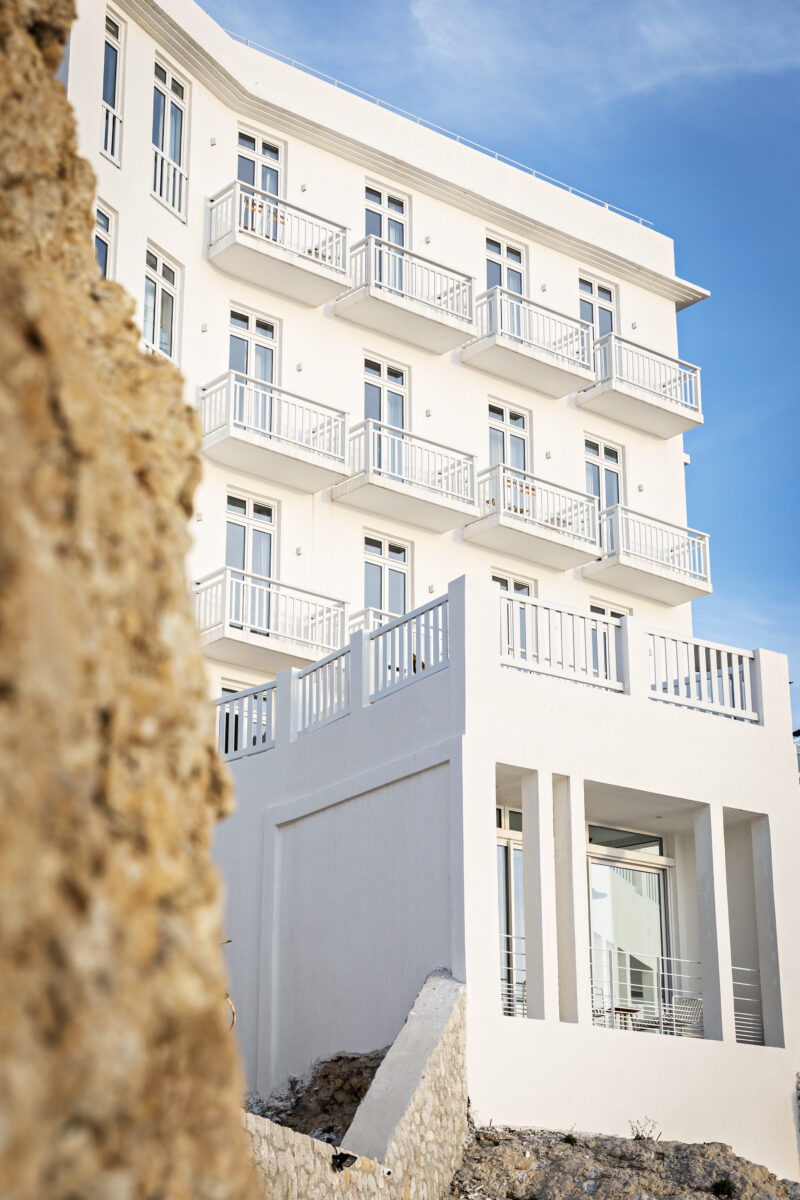
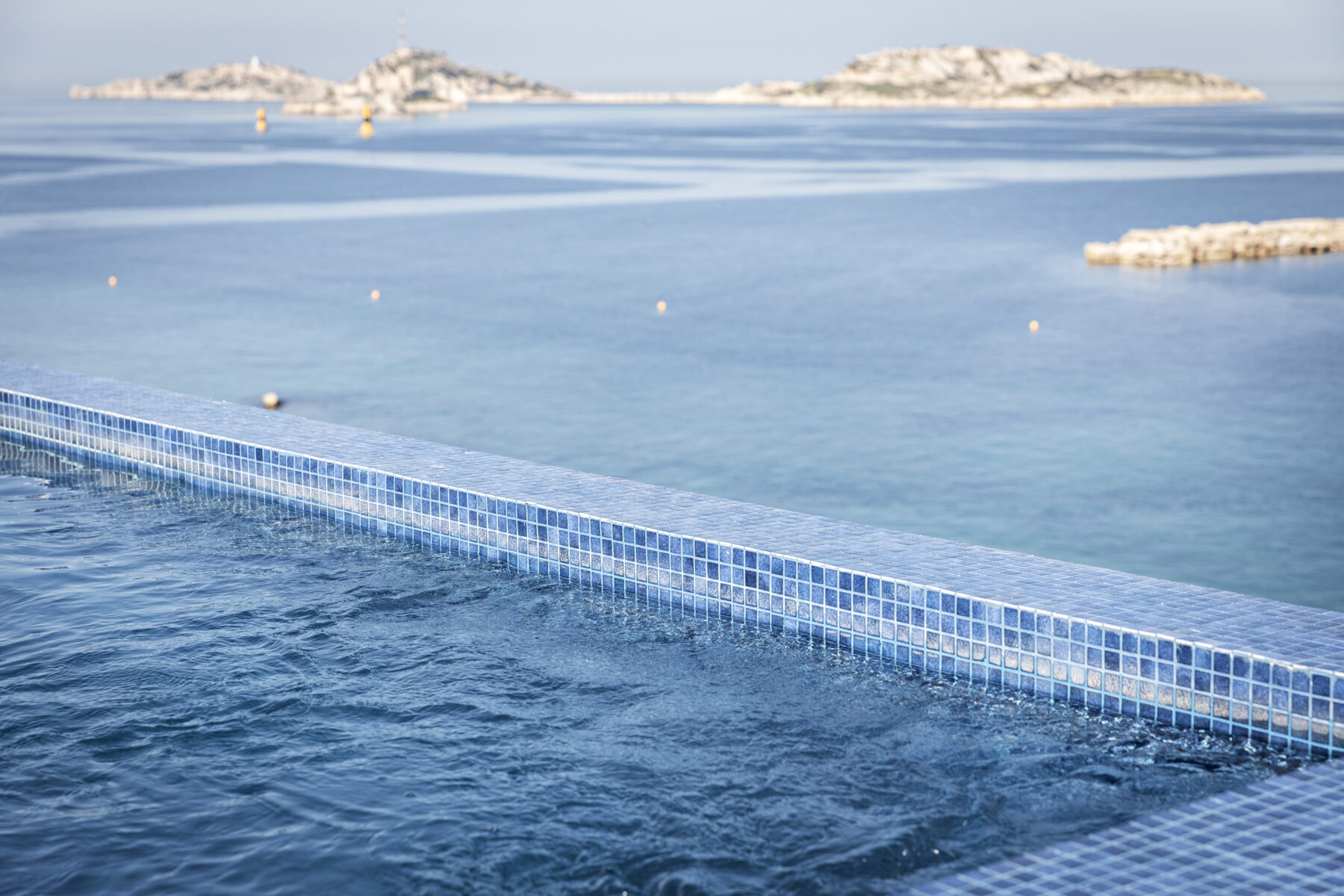
As for hotels, my friend and I spent one night at the hotel of the moment, Les Bords de Mer, a short stroll from Club Tuba. The views are incredible: waking up to a small balcony overlooking the Mediterranean at its most alluring blue, sparkling under the summer sun, with a complimentary espresso in hand. It’s one of those joys in life that makes you feel like Carrie Bradshaw seeing the Eiffel Tower for the first time. (The girls that get it, get it.)
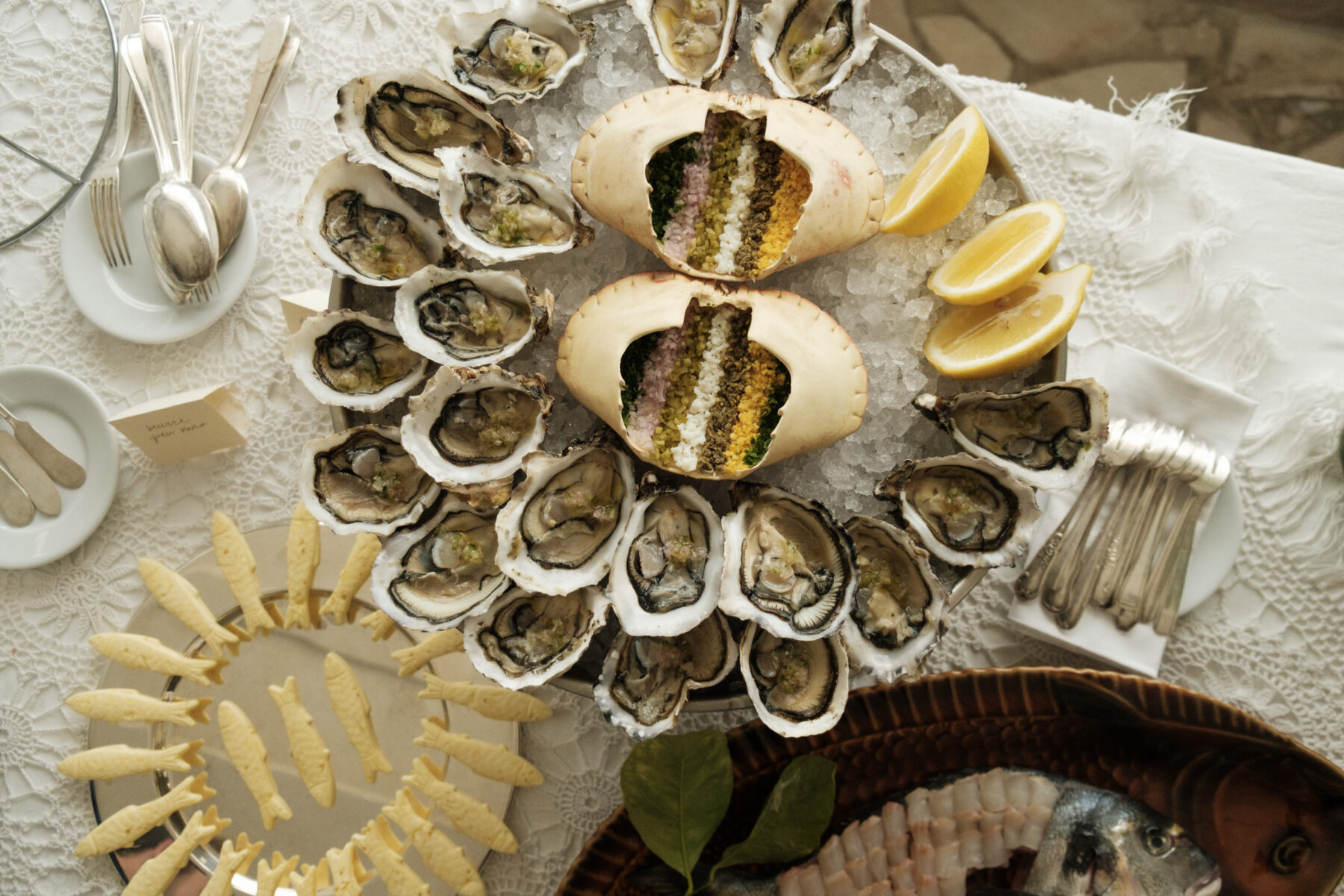
A collaboration with French house of the moment Sézane gifts every guest a complimentary yellow beach bag declaring Bonjour Marseille in the brand’s signature font. The hotel is sophisticated yet understated, allowing the views to speak for themselves. Even if you don’t stay, book a meal at its sea-facing restaurant, which combines Provençal flavours with Asian cooking.
If you’re looking for the scene, however, base yourself in Cours Julien. The Corniche – where Les Bords de Mer and its luxury hotel neighbours are located – is old-world French Riviera at its finest; but for Marseille at its most glitzy and grungy, Cours Julien is saturated with bars, clubs and restaurants that pack their own vibe of international cuisines and continental hedonism.
Restaurants and Nightlife
Au Petit Nice on Place Jean Jaurès is a fabulous watering hole with a buzzy outdoor terrace that, despite its nighttime popularity, usually has a table available. Drinks are cheap and gloriously French. Always a winning combination.
We stumbled upon La Maison Hantée, a popular dive bar playing 80s rock the Saturday night we visited. It’s just as busy inside as it is outside, with partiers seeking relief in the balmy night air from the sweaty boogying. There was even a woman getting a tattoo at the back. Afterwards, we strolled over to Le Champ de Mars, another dance spot where vintage French posters line the walls and tequila shots at the Art Deco-style bar go for two euros.
In regard to dining, it’s difficult to go wrong. North African restaurants and delis are everywhere; Agafay is particularly notable for its brilliant kitchen and homely service. For French food, Restaurant Romy is a stripped-back and stylish bistro a 20-minute walk from the Notre-Dame de la Garde Basilica, in the tree-lined Notre-Dame du Mont, a quieter (but by no means dull) neighbourhood beside Cours Julien.
And then, of course, there’s Limmat, which is unmissable, both for its small plates menu and its location. Book in advance to get an outside table upon the postcard perfect Escaliers du Cours Julien, a staircase saturated in the colourful graffiti that so characterises this part of the city. Evening light floods the space that grants spectacular dining views.
Words – Bea Isaacson


