Things are not always as they seem with the multimedia artist.
Vita Kari lives for the double take. The Los Angeles-based artist is a native of the digital age, using “the viral video as a medium” to push the boundaries of how audiences engage with art. Through different forms of trompe l’oeil, their work invites you to take a second look and question preconceived notions. Evocative of Surrealist works, notably René Magritte’s “Treachery of Images” piece, their installation “This Is Not A Billboard” is a lesson in subverting expectations.
Their work has evolved with them, and their experience with progressive hearing loss has led them to question how representation and accessibility can be facilitated through technology and social media. The result was Vitasona, a performance art series through a fictional hearing aid company that brings hearing aids to the top of feeds in intentional absurdism. Blending analogue and digital mediums, Kari continues to push their limits in an ever-evolving, expansive body of work. Keep scrolling to read the full interview…
For anyone discovering your work for the first time, how would you describe what you do as an artist?
I’m an artist using the viral video as a medium, and working with analogue illusions! Printing things out, making textiles—anything that gets somebody to apprehend the form, aka take a closer peek at what they’re looking at, because they can’t quite understand it the first time.
How has your artistic practice evolved over the past few years?
I think a lot of artists, myself included, find themselves obsessed with something. For me, I continue to find myself obsessed with mundane infrastructure, both virtually and in person. I’m so inspired by things we interact with every day but don’t spend a lot of time thinking about. I appreciate the trust we put into objects, and in my practice I want to have an obsession with “queering” them.
When we look at a screen, especially on social media, we trust the buttons that we know and interact with. There’s no reason that we should have questioned whether the UI will be analogue or printed out, right? Like, why would the text on screen, or the like button, be something that’s actually analogue, printed on paper by the creator of the video? That’s what I have been exploring for years in my ongoing “craziest thing” series.
Similarly, with textiles, as you get closer to my work, you see parts of the image glitched or painted or unwoven. In my sculptural work, there’s always an element of the uncanny. How can I create a somatic response, forcing the viewer to slow down, especially using mediums that perpetuate quick-paced attention spans?
The biggest way that my work has shifted over the last few years has been through my experience with hearing loss, which has been progressive. In the past, my videos were almost always me talking to camera, creating an illusion. But as my ability to mix the sound properly has become more difficult, I’ve been doing more speech-free videos, where they fully rely on visual language. This has created such a special impact, pushing me so much further in both my video and physical practices!
What first inspired the idea for This Is Not A Billboard?
The iconic Magritte “Treachery of Images” piece, informally known as “This Is Not a Pipe,” is a painting at LACMA. Featuring a painting of a pipe that literally just says “this is not a pipe,” it’s such a playful reminder that the representation of an image has such a large disconnect from the way it feels or is described—that the representation is not the actual thing.
Over the last few years, I’ve had an obsession with billboards, growing up in LA. You just feel the neon sleeves oozing out of every corner because of the billboard glow at night! It’s been so inspiring, as I spent a lot of my life in or around West Hollywood—big billboard town!
I have utilised billboard or billboard aesthetics in so many different projects, but I knew that for Pride, it would be so interesting to create a piece that was inspired by Magritte and somehow played with the idea of representation vs. image vs. personhood.
For this project, I am honoured to say I was a recipient of the Instagram Drafts Fund! Instagram selects a couple of artists and creators a year to make a big idea come to life!
Why were visibility and public attention themes you wanted to explore during Pride Month?
During Pride Month in LA (where I’m from and also live now), there’s so much advertising with queer and trans people in what seems like stock photo images randomly stuck onto a brand’s billboard. Sometimes I wonder about representation versus exploitation, and I wanted to explore that tension. It’s a bit tongue-in-cheek, but I wanted to push it further—what if we were literally inside the billboard? As in physically in there? What does it mean to be seen?
The aesthetic of the piece was actually again inspired by Magritte directly.
Featuring no branding or advertising of any kind, the black-and-white giant light box read “This Is Not a Billboard.”
What were the biggest struggles in bringing this project to life?
The biggest struggle for me with this project was definitely surviving the heat in essentially a 16-foot-long box that was only 2 feet wide, covered in tin foil on the inside, with massive lights on one side, sitting in the sun. And to get the effect of the bright lights, we had to work around the fact that there was direct sunlight, which required a ton of light and made the space inside extremely hot. The entire design was so interesting because I’m an idea guy—not a builder! I definitely learned so much about collaboration through this process. I collaborated with Evian X Lucy, my girlfriend, who helped perform alongside me. Other performers and people who made the whole thing come to life included Perry Picasshoe, Laela White, Sean Behr, Shay & Drip Dome, Emily Yin, Andre Atkins, SWSH, Jacob Barri, Andrew Rico, and more.
How did people react to This Is Not A Billboard when they encountered it along the West Hollywood Pride route?
People passing by asked if the piece was a digital billboard, or if there were real people inside! Some even just accepted it was a digital billboard (which, of course, it wasn’t—it was just us in a light box creating a silhouette), and asked what it was advertising or what it was for. Something really specific I wanted to do was make the piece black and white. Pride is such a colourful experience. I wanted this piece to stick out as an almost grayscale digital billboard, perhaps half-rendered like a glitch in real life.
Can you tell us how the idea for Vitasona first came about?
I became really interested in how hearing aids found a space in disability while glasses became mainstream accessories and fashion. I went down a rabbit hole of the history of hearing aids to find out that from the ’50s to the ’90s, there weren’t massive steps forward in innovation!
What if hearing aids evolved like glasses? Instead of virtual reality glasses, would we be having something more similar to virtual reality cochlear implants? Would hearing aid brands be more similar to how Apple was in the 2000s? What would that journey look like?
Vitasona imagines an alternative history of hearing technology. Why was that concept interesting to you?
I made Vitasona as a way to both critique and parody medical tech while also bringing hearing aids and hearing loss to the front page of the Internet. At times, I think there’s a push to go offline or do a digital detox, but I think many forget who gets left out from that. I’m tethered to my phone and can’t go a day without it because it’s how I adjust my hearing aids from any space I’m in. If I miss a night of charging my hearing aids, I am lost in conversation all day. The best way I have found to have these hard conversations is through play and drama, especially through social media.
How do we have conversations about disability in a way that can hit the front page of the Internet? That’s what I’m trying to figure out.
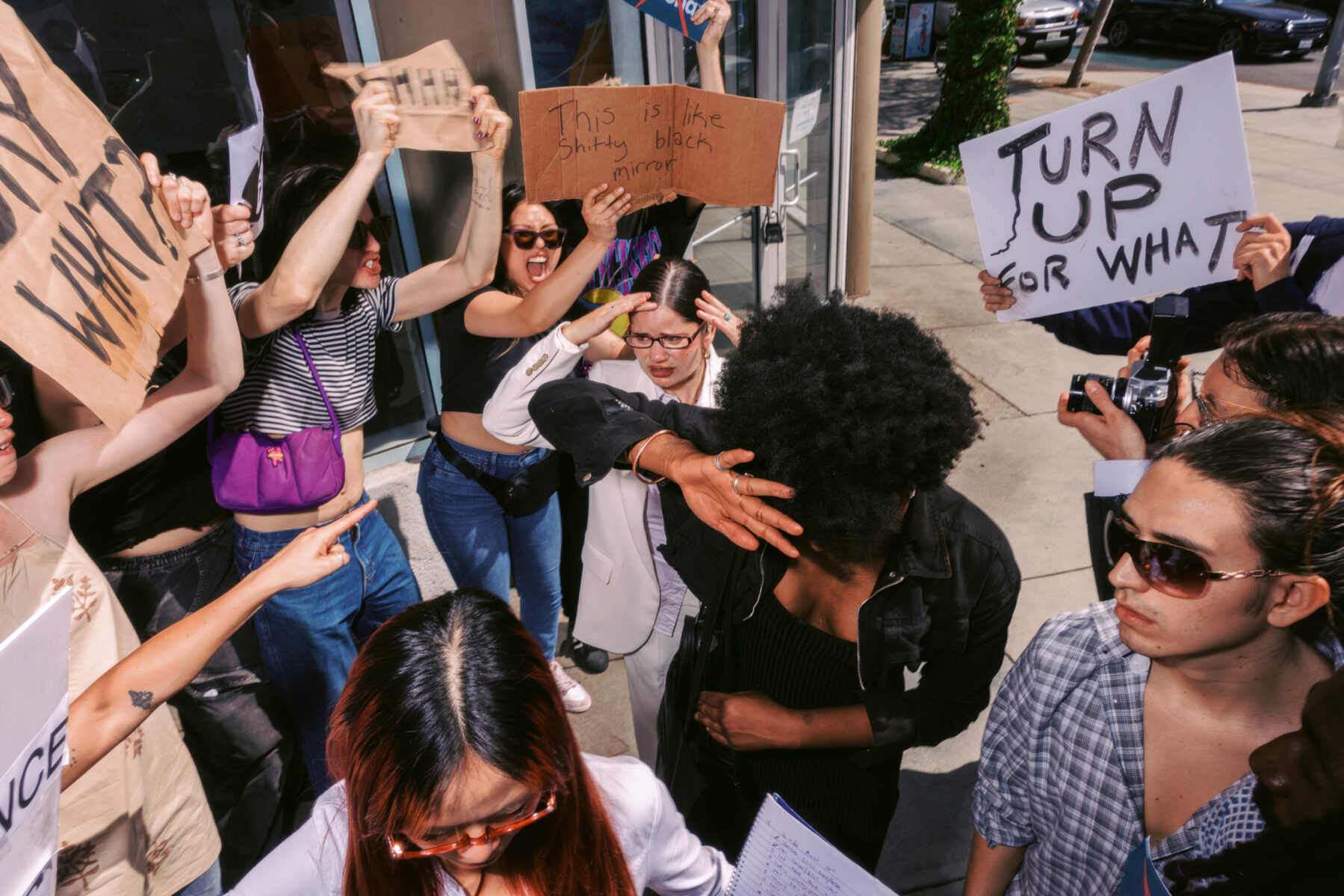
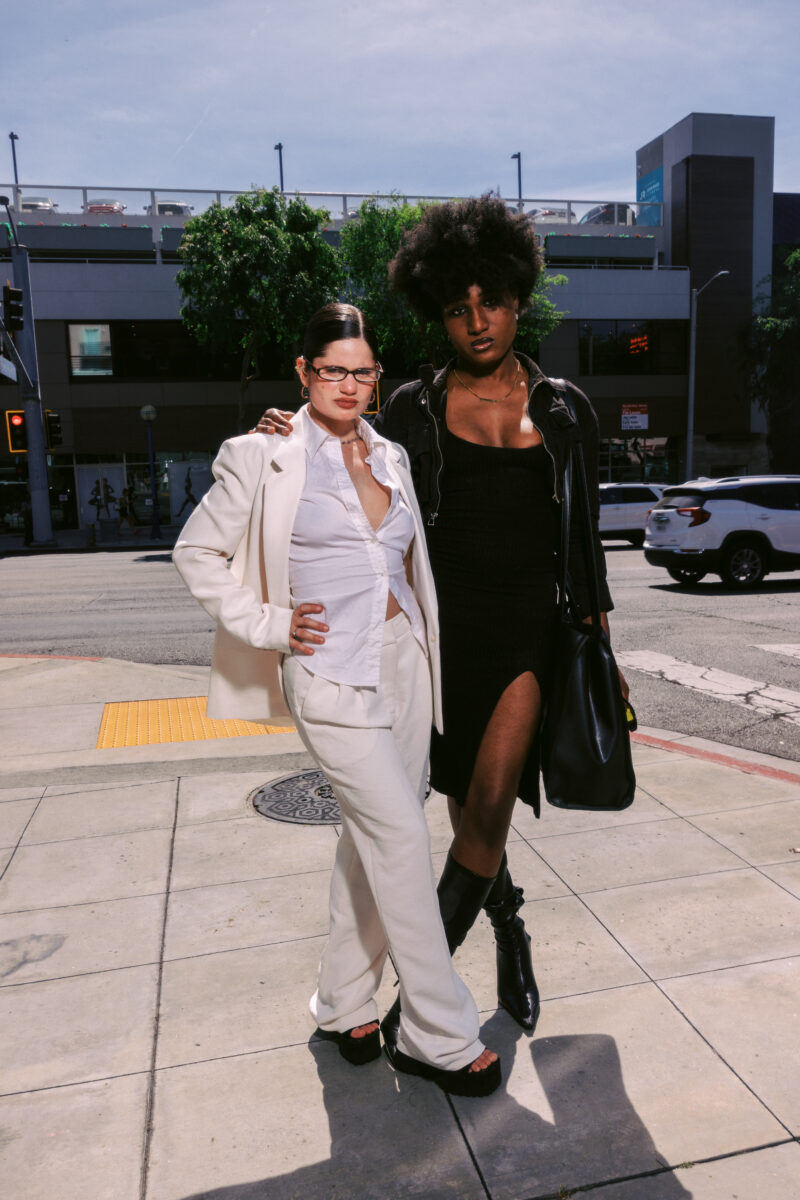
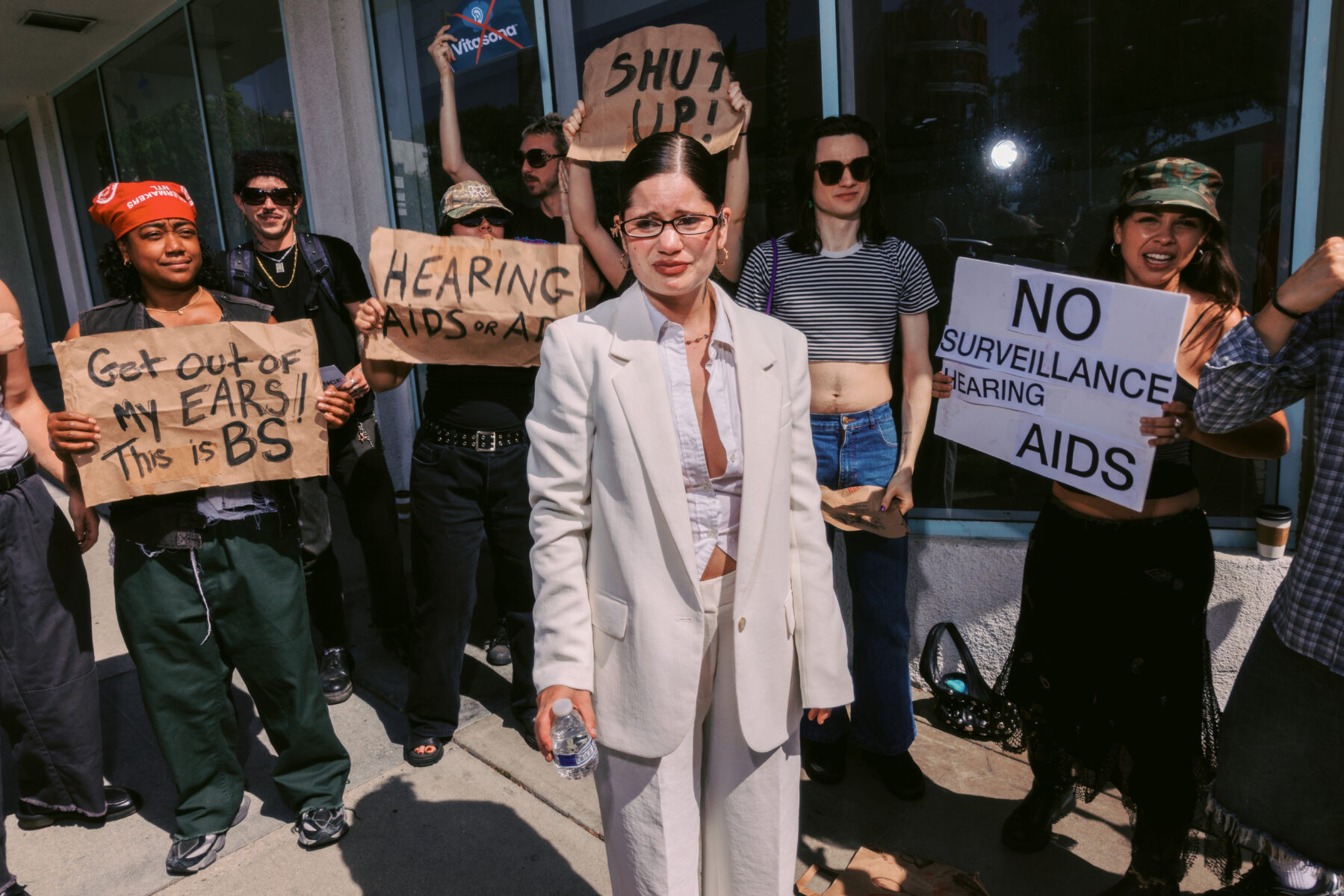
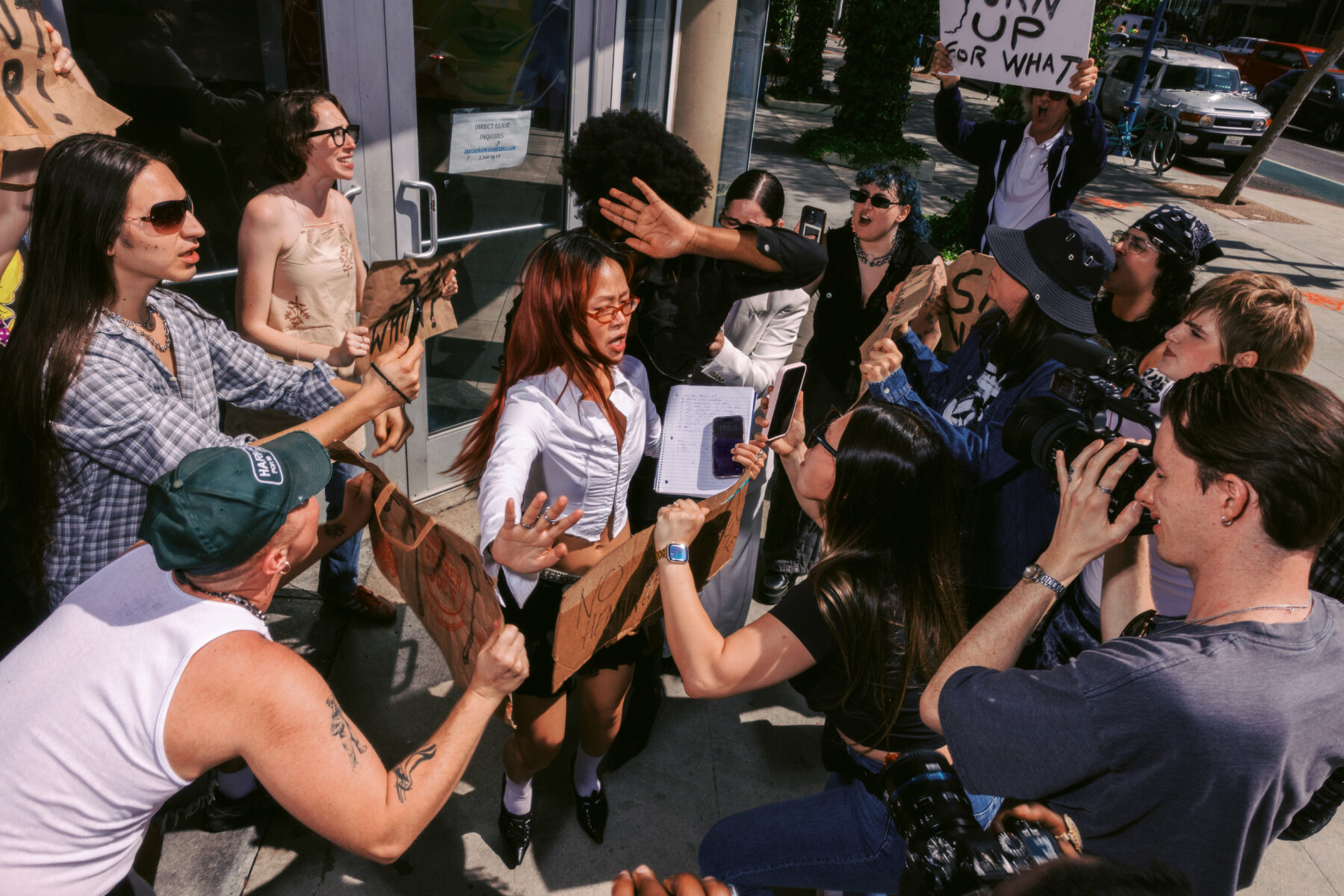
Vitasona is an absurd performance art series that spans viral videos to real-life fake historical items. So far I’ve created a newscast where the CEO, played by me, is under fire after it’s found out that the company’s hearing aids are playing ads without consent into users’ ears. The video shows a protest, shot as a hyperrealistic newscast. When I put it on social media, I filmed it on my phone while watching it cast onto a TV, adding that moment of realism, suspending reality.
Some of my videos also include items I’ve made, including sculptural works that are actually 3D-sculpted imagined models of what a 1920s hearing aid could have looked like if they had been invented back then. I give them the aesthetic of a speakeasy, flapper vibe, and then 3D-print them using iron filament. Through a process of rusting them, they look like they were literally artefacts taken from a museum archive.
What’s something you’re currently interested in that might influence your future projects?
I’m learning Blender currently, and I think it’s changing my practice in so many ways! Of course I’m a printer guy, so being able to create lifelike objects is such a gift. I’m also incredibly inspired by blimps. Los Angeles is the perfect environment for blimps, one of a few in the entire world! There are only 20 to 25 blimps left in the entire world, and a crazy number like half of them are in Los Angeles! Randomly, I saw some blimps lift off the other day, and it was honestly life-changing. It’s such a unique and special thing, and to just be born in the city where the blimps exist means that I need to find a way to ride on one—I think that’s my new life goal.
The mysticism of blimps is so interesting—how they were going to be seen as the best way of transportation, until a metal zeppelin had a massive accident, and everyone was off blimps forever after that.
Long story short, blimp magic and hopefully one day riding on a blimp will absolutely be something that informs my future projects.
Looking ahead, what can audiences expect next from you?
I’m currently in the LACMA JEFFREY DEITCH art parade, collaborating on a project with Joaquin Stacey Calle. We are exploring the doppelgänger by creating life-size puppets of ourselves that are strapped to our bodies, appearing as an army of 15 people. In reality, there are actually only five humans and 10 puppets.
I don’t want to give away too much yet about another project, but look out for VITASONA: Listening Lab soon!


