On her rich and sophisticated fourth album, The Gem, Australian singer-songwriter Julia Jacklin finds solace in the small things and sounds sublime doing so.
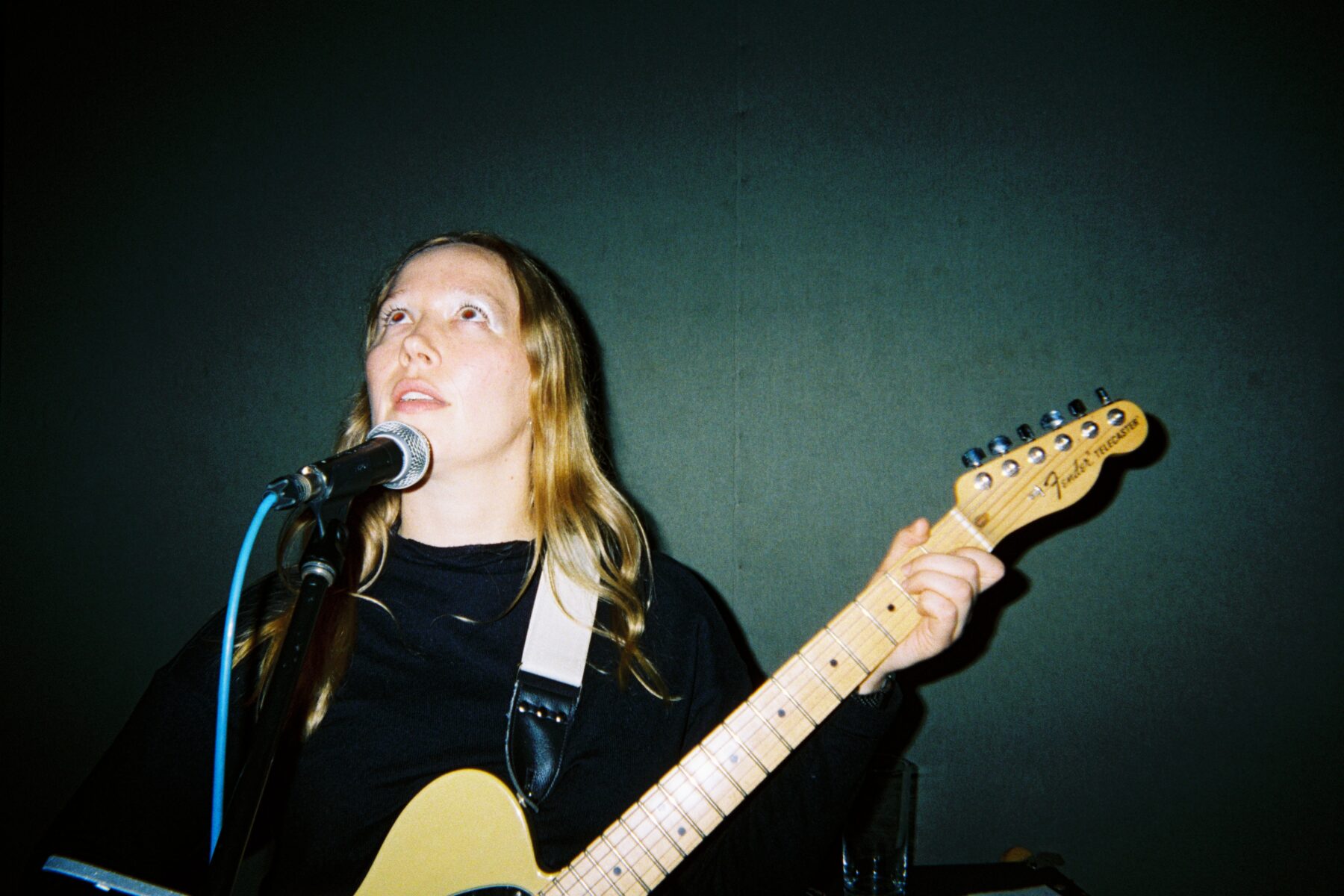
Julia Jacklin has been placed on some of music’s highest pedestals in her decade-long career. From her independently released 2016 debut single, “Pool Party”, hype is something that’s followed her from the very beginning. This initial buzz stood firm as she went onto pen some of her most beautiful songs (“Don’t Know How To Keep Loving You”, “Pressure to Party”, “I Was Neon”), whilst also expanding with other moments, including her rendition of The Strokes’ “Someday” on Triple J Radio. Critically acclaimed at every turn, her adoring fanbase is one that reaches far beyond her home walls.
Now, though, Jacklin is finding comfort in treading a different path, debunking her pedestal, and redefining what it means for her to be a musician. “What if you just threw everything away and tried to rebuild it?” she asks. It’s a fitting MO for the change she’s embraced both in her work and personal life over the last couple of years. Dialling in from her home in Melbourne, Jacklin discusses how the initial experiences of making her new album, The Gem, proved an optimal catalyst for change. “When I first started making this record, I was racing towards this deadline that I’d essentially created inside my own head,” she explains. “It was mixed, mastered; I had a listening party at my own house, I was even making speeches. I was convincing myself, my band, everybody that I was totally ready for this. But I suddenly realised I was stuck on a treadmill, thinking I must put out a record every three years, even whilst thinking to myself that I wasn’t totally ready.”
While she admits it was an uncomfortable decision, pulling the plug on this version of the album allowed Jacklin to take tangible steps towards defining her own rules for the first time in her career. This was only bolstered further with her label contract having run out and her agreeing to part ways with her former management. As an artist so used to the music industry’s makeup, feeling untethered to its grasp was foreign at first. “The first part of that feeling was the fear of feeling like I have to prove that I can do this without all that infrastructure around me,” she says. “Then the second part was realising the freedom I had. This whole period of my life – from changing up my team to approaching music differently – it’s all been an experiment to see if I can rewrite these deeply entrenched stories about myself and how I make music.”
Jacklin spent a further eleven months refining The Gem in a studio above one of her favourite local pubs (the album’s namesake) in the Collingwood suburb of Melbourne, alongside a close-knit crew of friends. Revelling in her newfound sense of freedom, this new approach to recording proved to be a revelatory one, where Jacklin was actively encouraged by her producer (Robert Muinos) to be messy, make mistakes, and enjoy the fun of making music. “On my last three records, I met my producer on the day we started recording,” she sighs. “It all felt very isolating and so separated from my normal life. I thought that was integral to making music, to completely wrench myself out of my life.”
Instead, normal life is exactly what Jacklin homed in on, both in the studio and outside of it. During breaks in recording, she would nip downstairs to watch local bands that the pub would host every night. Outside of the studio, Jacklin found peace sitting in a cemetery near her home most days to process what she’d been working on, whilst also spending time hanging out and making ‘genuine’ friendships. As an artist with global acclaim, feeling a part of this shared community at home – rather than being ostracised as its most famous musician – is something that she relished profoundly. “I feel like [being special] was such a pursuit of my childhood,” she says. “But when you’re feeling like you’re on a pedestal and people are telling you you’re so special – it doesn’t feel the way you think it’s going to feel. It actually makes me feel less connected to people. Now, I’m able to be around people so much more because I don’t feel the pressure to make an impression anymore. I’m not as stressed about the narrative of who I am, I’m never going to be an authority of my own self, and it’s just so freeing to let go of that.”
“Brand New” opens proceedings on Jacklin’s excellent fourth album in an appropriately forward-thinking fashion. Its lyrics contemplate the idea of leaving your former self behind (“I’m free, so let me be brand new”), while sonically, its glitchy, electronic feel steps fully into new territory for Jacklin. Similar themes of rebirth echo in other tracks such as “God Sometimes”, but essences of Jacklin’s signature indie-led style remain throughout. Lead single “Get Away From Me (I Think I’ll Love You Soon)” delivers the album’s brightest moment.
With lyrics on love and freedom pairing with guitars that nod to eighties jangle rock, Jacklin laughs at the thought of it sounding like an entry straight from her songwriting handbook. “I kind of thought the song didn’t sound like me, but a lot of the feedback I’ve had is like ‘No, that’s a classic Julia Jacklin song!’ I know that people associate me with being sad and slow, but this reminded me just how much a huge part of my personality is just writing songs that are fun and don’t always need to encapsulate the depths of the human experience. I love bops!”
There are also plenty of tender points across The Gem’s ten tracks, including “Angel Vision”, which leans into religious themes via lyrics that tackle “how to feel free with someone watching over me”. Growing up in a Catholic school, divine sources have long been a subject of Jacklin’s writing. Yet, while she discusses being “forced to live in a world that is drenched in religion,” she mentions that it’s never been a conscious choice for her to explore religion in her songs. “You can throw a rock in any direction, and you’ll find people who have religious trauma,” she says. “This was the same for many of the people I made this record with. But I also think [religion] is something that we all share one way or another, so it’s a beautiful tool to create concepts, using religious language. Even as a melodist, words like ‘angel’ and ‘God’ sound really good.”
Melody has long been one of Jacklin’s strong points, and on the album’s closing track, “I Wish (feat. The Maes)”, this fully comes to light. It offers a stunning point of reflection, acting as a heartfelt letter to Jacklin’s younger self. Could a young Julia Jacklin ever have imagined the things that she’s gone on to achieve? “No, no way!” she affirms. “When I started playing in my local scene, I didn’t know anyone who had a toe in the music industry. Being in Australia as well, it’s a different thing here. But I think young Julia would be so stoked.”
Marked by a transformative period for Jacklin, The Gem’s ethos of excavation allows her latest work to shine, dusting off any weight of expectation and revealing vivid hues of self-growth and renewal. Revered for her vulnerability in her material, it’s no surprise that a “painful excavation of self” is how Jacklin describes the process of every album she has made, as well as its promotion. “It’s not a natural state, I think, for anybody to be in to promote music in this way,” she ponders, “but I am more equipped to do it this time. I feel surer of myself; I like myself at the moment, which is a nice feeling.”
Most importantly, it’s seemingly humble assurances like these that continue to open new pages for Jacklin to rewrite her story and enjoy life to the full. “It’s been a really hard couple of years, but it’s also been the best years of my life in a way,” Jacklin smiles. “I’ve had to be truly honest with myself, and not just ‘typical singer-songwriter being vulnerable’ type stuff; I’m talking about deep growth outside of music, which has reaped such beautiful rewards for my personal life. I love music, I’m glad I have a job, and it’s amazing that those two things are the same. I know it’s really rare, and I’m so lucky. But my experience of being alive is more important than anything.”
Words – Jamie Wilde


