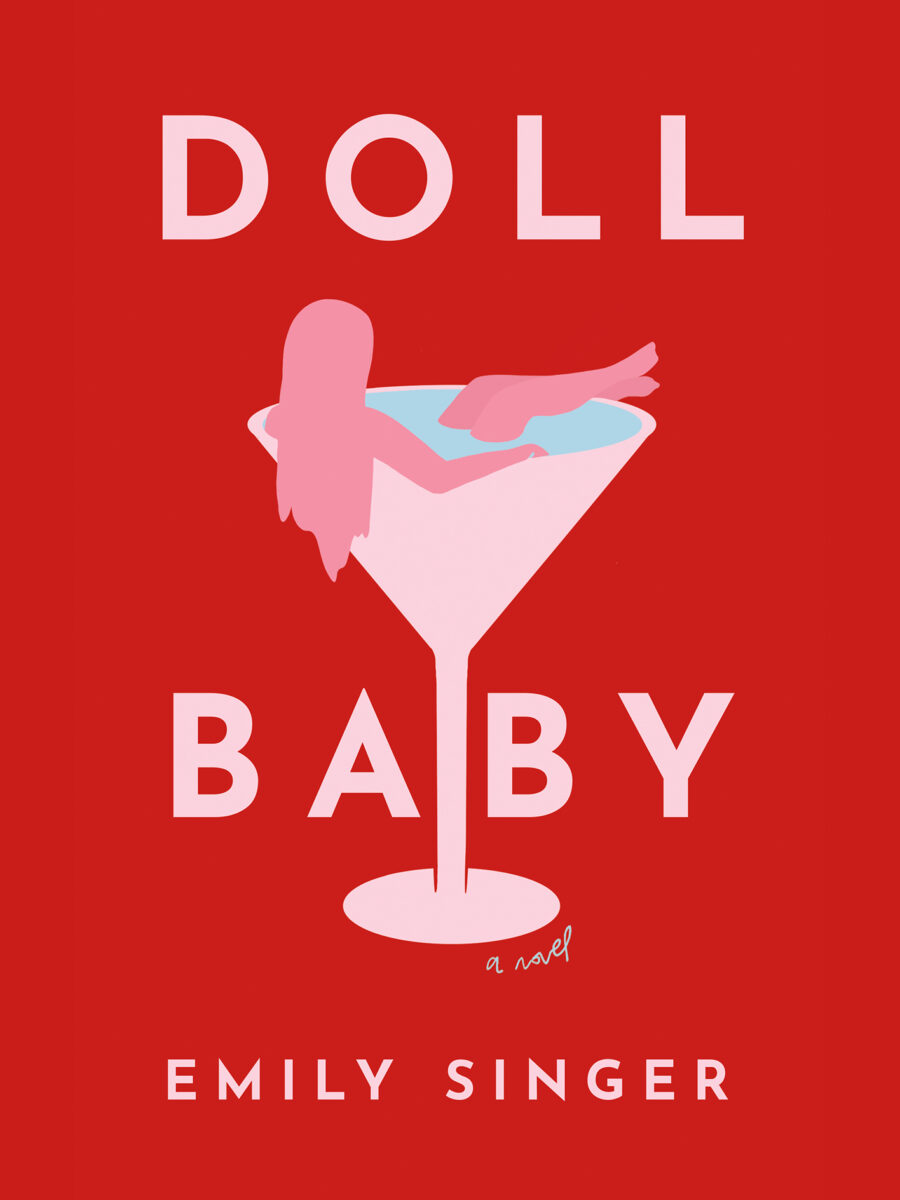
On her debut novel Doll Baby, Emily Singer explores the messy, wild, and unforgettable realities of girlhood and fearless storytelling.

Emily Singer has never been one to follow the rules. As a kid she read under desks, daydreamed through class, and probably drove her lecturers a little mad. By the time she was making her first short film, sticks & stones, she had learned how to turn curiosity, chaos, and a sharp sense of observation into something that commands attention. Now she has taken that same fearless energy and poured it into her debut novel, Doll Baby.
This is a book that refuses to be perfect and instead celebrates all the messy, complicated, and exhilarating parts of being a girl. Set in the glittering, grimy heart of Los Angeles, Doll Baby follows Jolie, a wild, magnetic, and sharp-witted protagonist, as she navigates the contradictions of girlhood: the thrill, the heartbreak, the beauty rituals, the messy mistakes, and the moments that shape who we become. Funny, dark, romantic, and brutally honest all at once, the novel holds a mirror up to the reality of growing up without ever looking away.
Emily’s creative world is not neatly contained. She moves fluidly between film, television, and now literature, bringing a cinematic sensibility to her writing while embracing the freedom of fiction. In this interview, she opens up about writing at odd hours, revisiting her own adolescent experiences, and why it can be both thrilling and terrifying to see parts of yourself reflected in a story.
Read on for the full conversation…

Hi Emily, thanks for speaking with us again. The last time you spoke to Wonderland, you were releasing your short film sticks & stones. Now you’re stepping into the literary world with Doll Baby. What made you want to turn to fiction and write a book?
Hi! So happy to be back. I’m such a fan of Wonderland. sticks & stones is actually woven into Doll Baby, which is such a fun Easter egg for those who’ve watched. I’ve always known I’d write a book. I was the kid who would read two or three books a day and get into trouble for reading under my desk in every class except English.
This project has been in the back of my mind since secondary school. I wrote the first chapter a couple of years ago as a standalone short story, planning to make it into another short film. Then I wrote chapter twenty-one on a plane ride and just kept coming back to it, feeling like there was something there.
Writing for the screen and writing a novel are very different mediums. What challenges did you face moving from film to fiction, and in what ways did the process stretch you as a storyteller?
If you’re familiar with human design, I’m a Reflector, which makes up less than one per cent of the population. I’ve been told that I’m meant to express myself through different mediums and not box myself in. Each project comes to me in different ways, needing different things. I think I mix both mediums of screenwriting and fiction within each other. I’ve been told that at times my scripts read like novels and my novels read like scripts, which I always consider a compliment.
I think the biggest challenge for me is knowing when to let go and leave something be. Also, because it is my debut novel, I’d ask myself the obvious questions that I’m sure every first-time author asks: Is anyone going to like it? Is anyone going to read it, or care? What helped me move past that fear was Rick Rubin’s The Creative Act. He says that the success of your art is not how it’s received, but the process of creating it. And I truly loved the process of writing Doll Baby.
The book is set in LA, a city where you grew up. Did you draw from your own experiences of Los Angeles, or did you approach the setting more as a character in itself?
I definitely drew from my experience of growing up in the Valley and living in LA. At the same time, I’ve always been fascinated by how noir films and novels use the city almost as a character in itself, so I leaned into that tradition as well. I do love LA, but I also poke fun at it quite a bit throughout the book. There’s such a duality to the city, with its glamour and grit, beauty and absurdity, and I mirrored that duality in Jolie as a character as well.
Writers often say characters either come to them fully formed or slowly reveal themselves. How did Jolie arrive for you, and what was most important to capture about her? And when you picture her off the page, who is she to you?
Jolie arrived slowly, over time, and eventually took on a life of her own. While I drew from some of my own adolescent experiences, she feels to me like a fully living, breathing person. She’s witty, sarcastic, and highly perceptive of the people around her. There’s a lyrical fatalism to her tone, as if she’s in on the joke of her own self-destruction but can’t quite stop it, or perhaps doesn’t want to. She’s hungry for validation, deeply romantic, and quietly brutal.
It was important for me to show her messiness, her darkness, her desire. I think as women we often feel that we have to hide those things to be portrayed as good, but I’ve learned that there’s nothing like being authentic to who you are and still always striving to be a better version of yourself.
What did you most want to say about girlhood through Jolie’s story?
I wanted to show the reality of girlhood: the wildness, the shame, the rituals of beauty, and the self-inflicted chaos. I wanted to capture the way friendships, relationships, and family dynamics shape you during those pivotal years, for better or worse. Girlhood can be both delicate and ruthless, and I wanted Doll Baby to hold space for all of it without looking away.
What were you reading — or rereading — while working on Doll Baby? Did any writers or books shape how you thought about girlhood or voice?
While working on Doll Baby I read a number of women’s fiction books. My Year of Rest and Relaxation by Ottessa Moshfegh drove me absolutely crazy in the best way. I couldn’t stop thinking or talking about it. It was brilliant. I read all of Emma Cline’s books. She’s a massive inspiration to me, and I think she has one of the most distinct and singular voices in contemporary fiction. Sex & Rage by Eve Babitz, of course. A Very Nice Girl by Imogen Crimp, Acts of Desperation by Megan Nolan, Big Swiss by Jen Beagin, Milk Fed by Melissa Broder, Normal People by Sally Rooney, Acts of Service by Lillian Fishman, The Virgin Suicides by Jeffrey Eugenides. Sylvia Plath. Anaïs Nin. Lisa Taddeo. The list goes on.
Who do you imagine Doll Baby speaking to most directly? Is there a reader you hope feels especially seen through Jolie’s journey?
I imagine Doll Baby will speak mainly to young women between the ages of fifteen and their early thirties, but girlhood is universal. Anyone who has struggled in relationships, friendships, or in their relationship with themselves will be able to connect with Jolie’s story in some way.
My hope is that readers come away feeling a little more “normal.” It’s okay to be messy and human and have layers. Because what is “normal” anyway? We are all doing this thing for the first time, I suppose. We are all hurt and insecure in some way. If we are able to be more compassionate with ourselves and with others, we might be able to accept the complexities of life more easily.
What do you hope readers carry with them after finishing the book?
I hope readers know that they can rewrite their story. Jolie’s whole life was about being chosen, loved, admired, always seeing herself through the eyes of others. But her biggest lesson was in choosing herself, in really and truly seeing herself, and in loving her own journey.
That is what I want for readers too: to give themselves grace, to forgive past mistakes, and to feel gratitude for the lessons along the way. I know I do.
Looking back on the process of writing Doll Baby, what surprised you most about yourself as a storyteller?
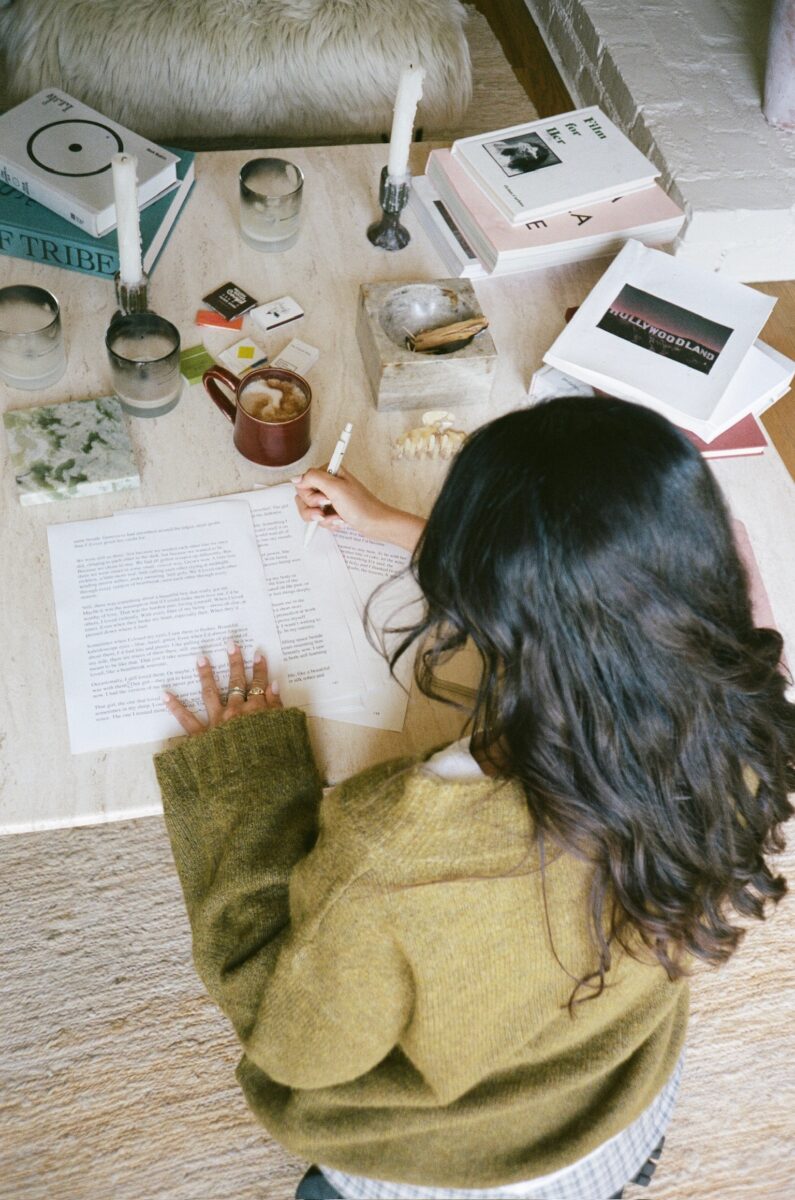
I think what I’ve learned about myself over the years is that if I say I’m going to do something, I really do it and I don’t let anyone stop me. What surprised me, honestly, was how deeply I ended up diving into my own psyche. There were nights when I wrote until two or three in the morning and it just poured out of me. I’d wake up in the middle of the night to write. Sometimes I’d even wake up to scribble down half-coherent sentences. Writing, for me, is very cathartic because I choose to tell stories that are deeply personal and tap into so many of my own lived experiences. I’m not afraid to share pieces of myself or draw inspiration from characters in my own life. Let’s just say there are definitely a couple of people who could read this book and recognise themselves — so thank you for the source material.
You move fluidly between mediums — film, television, and now literature. Where do you see your creative work heading next? Another book, more film, or something else entirely?
Although sometimes excruciating, I loved writing a book and I definitely plan to write more novels. I’m so grateful to Thought Catalog for taking a chance on me as a first-time author. I started my creative agency and production company, Elsi, as a home for all of my creative projects and endeavours — a brand, if you will.
Now that I’ve really found my voice and style, which will continue to evolve as I do, I see my work across TV, film, and books all circling around the same themes: dark, sexy, evocative, character-driven stories. I’m so excited to share the projects I have in the pipeline, and I feel incredibly lucky to have discovered so much of myself through creating.
Thank you so much for having me back.
Words – Duda Albonico
Photography – Maya Aviezer


