London band Keo is becoming impossible to ignore. With their debut album, Put A Smile On For Me, frontman Finn Keogh is trying not to notice.
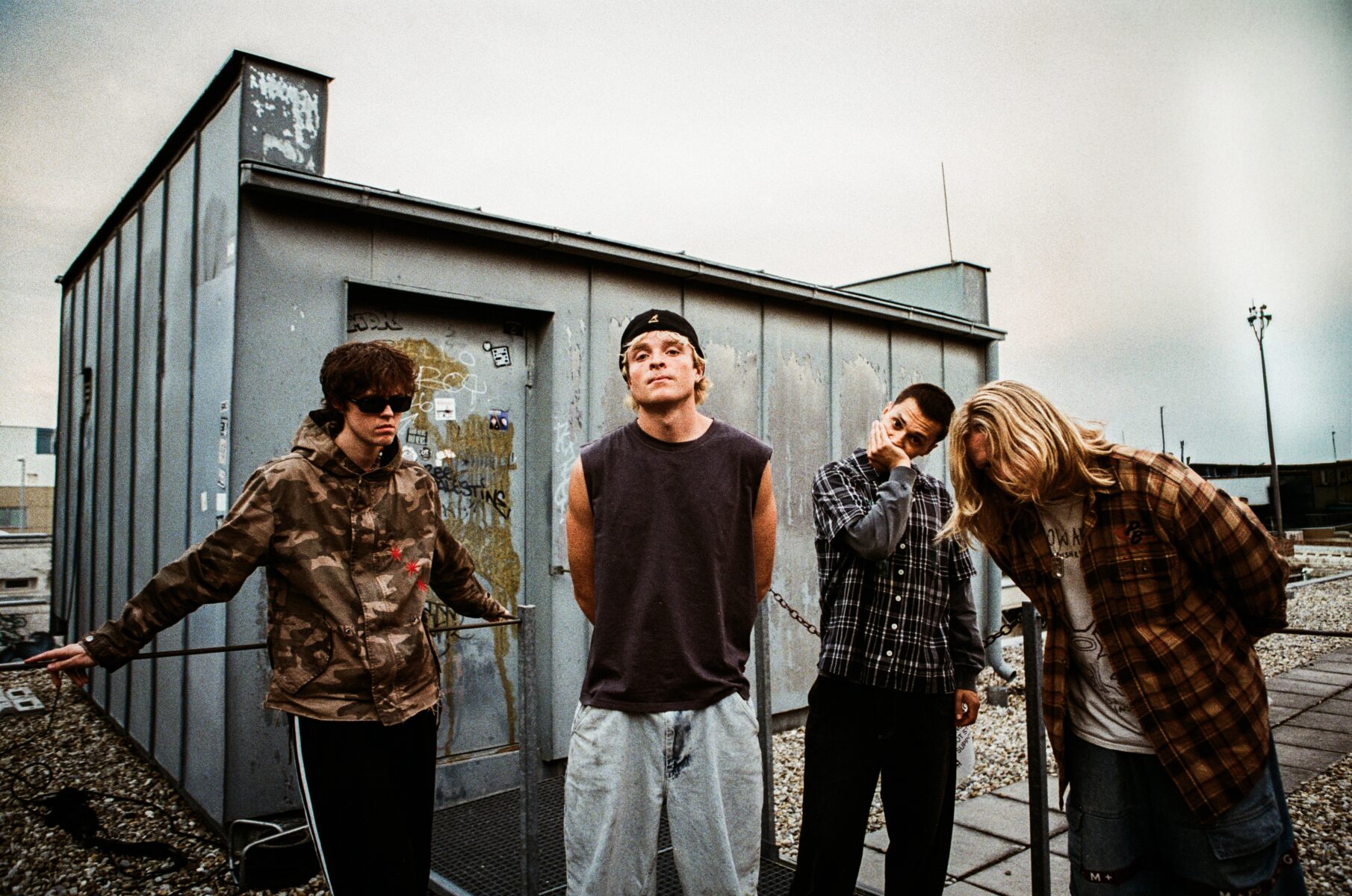
The first thing Finn Keogh and I establish is that 10am is probably too early to be discussing the subconscious.
In fairness, I started it.
Keo are due to spend much of the following week playing shows and, on September 25th, release their debut album, Put A Smile On For Me, via Island Records. For now, their frontman is sitting on the other side of an early-morning Zoom trying to explain his theory that there are effectively two versions of himself inside his head.
The conscious one worries about all the usual inconvenient things: how he appears to other people and what they might think of him. But somewhere underneath sits the subconscious, “much more humble and much more honest”, and considerably less frightened of making him look bad.
“You have to try and access that,” he says, “and let that version of you write the songs.” It is quite a lot for this time in the morning, and it doesn’t get any lighter.
Keogh and I discuss jealousy, self-loathing, impostor syndrome, the difficulty of growing fame and, eventually, Plato’s cave. Somewhere in the middle of it, he seems to realise what has happened.
“These interviews become a therapy session,” he says. “You’re kind of asking all of the things that a therapist would ask.”
I offer to get the notebook and sofa out.
“Sorry,” he says. “I’m in an emotional mood this morning.”
Fortunately, Put A Smile On For Me suggests this openness has become something of a creative asset. Despite its seemingly cheery title, Keo’s debut is full of people having a pretty abysmal time.
Desire curdles into jealousy; love becomes possessive. Keogh rarely writes himself the flattering part. On “Loser”, he reduces himself to “I’m such a loser // I’m best alone.” “That’s Me” looks back at a relationship where jealousy gradually introduced so many boundaries that both people became, as he puts it, “a bit of a shell” of themselves.
“In a lot of relationships, when people start dating, they kind of fall victim to their own love a bit,” he says. “They only see each other and basically try to burn through the spark as quickly as they can.” Keogh’s solution to an uncomfortable thought is often to make it worse. “Something about describing [those feelings] exaggerated made it easier to live with the reality of the unexaggerated version.”
Sometimes, the subconscious gets there before he does. “Bird On The Wire” was written whilst the relationship at its centre was still technically alive. Its refrain – “Light me up to put me out again” – describes someone magnetic but ultimately fickle.
“It was probably the beginning of the end.”
The same exaggeration exists in the music. Put A Smile On For Me rarely leaves a feeling at human size. It is heavy and distorted, but Keo understands that loudness only works when there is somewhere quieter to break out from. A private humiliation can suddenly sound catastrophic.
The album was self-produced and recorded in ten days. Being alone gave Keogh nobody to be self-conscious in front of.
“It’s like trying to pet a bird,” he says. “It could just take off any minute if you’re not careful.”
Beforehand, he filled pages with ideas about what the first Keo record should sound like and mean. Almost none survived.
“The most Keo-sounding thing would be just not to think about it.” A charming philosophy when nobody knows who you are. Considerably harder once thousands of people are waiting for you to do it again.
By the time I write this, the album is out. Keo have packed a surprise release-night show in Peckham, sold out Brixton Academy and found themselves leading the midweek race for No. 1 album, currently ahead of Taylor Swift. Four young men making their first record, and their competition? Only the biggest pop star on the planet.
Yet Keogh seems more affected by the 400 or so fans who appeared at a Manchester pop-up for “Pistol” with a day’s warning. Numbers are wonderfully easy to disassociate from. Four hundred actual people, less so. I tell him the footage looked like the point in a music biopic where you realise the band might not be playing small rooms much longer.
“It is, yeah,” he says. “And you don’t want to believe it. You just can’t.” His younger self would have assumed this meant he’d made it. Instead, “it just gets higher and higher. You’re forever chasing something.”
Keogh has discussed the moving finish line with Wolf Alice, whom Keogh supported at Finsbury Park this summer. I happened to be in the crowd, watching a band I associated with much smaller rooms suddenly occupy a field of tens of thousands. “I kind of give everything to every gig, so it doesn’t really matter whether it’s Finsbury Park or the fucking Finsbury Pub,” Keogh tells me. “Ironically, we might even be more passionate in a pub.”
The same goes for their sound. “When you don’t understand why it went right and you love it and it feels honest, that’s kind of annoyingly the thing that you need to be going for.”
Keo arrived at a strange moment to become a successful young British guitar band. The appetite for them is enormous, so is the appetite for deciding which bands “deserve” the attention. Online, ‘indie poo’ has become a catch-all insult for a perceived strain of new British guitar music: familiar riffs, vocal affectations, parkas, pints, and other vague signifiers of frontmen past. Comparisons to Wunderhorse have followed Keo throughout their rise. Keogh doesn’t entirely reject the influence. The band’s lineage stretches through ’90s alternative rock and, more personally, back to his childhood singing old Irish songs with his father in pubs. None of which grants them some special certificate of authenticity. It is the need for one that irritates him.
“It pisses me off.”
His first instinct isn’t to defend Keo. He brings up another young band caught in the discourse, whose frontman, he tells me, grew up in foster care, and then Oasis, whose working-class beginnings have become inseparable from their mythology. He wonders why class and place can be romanticised in retrospect, but sneered at in younger bands.
“People want something real and relatable and true and actually not from a privileged background, that hasn’t got nepotism in it,” Keogh says. “But then they start calling these bands ‘indie poo’, which is outright bullying, I think.”
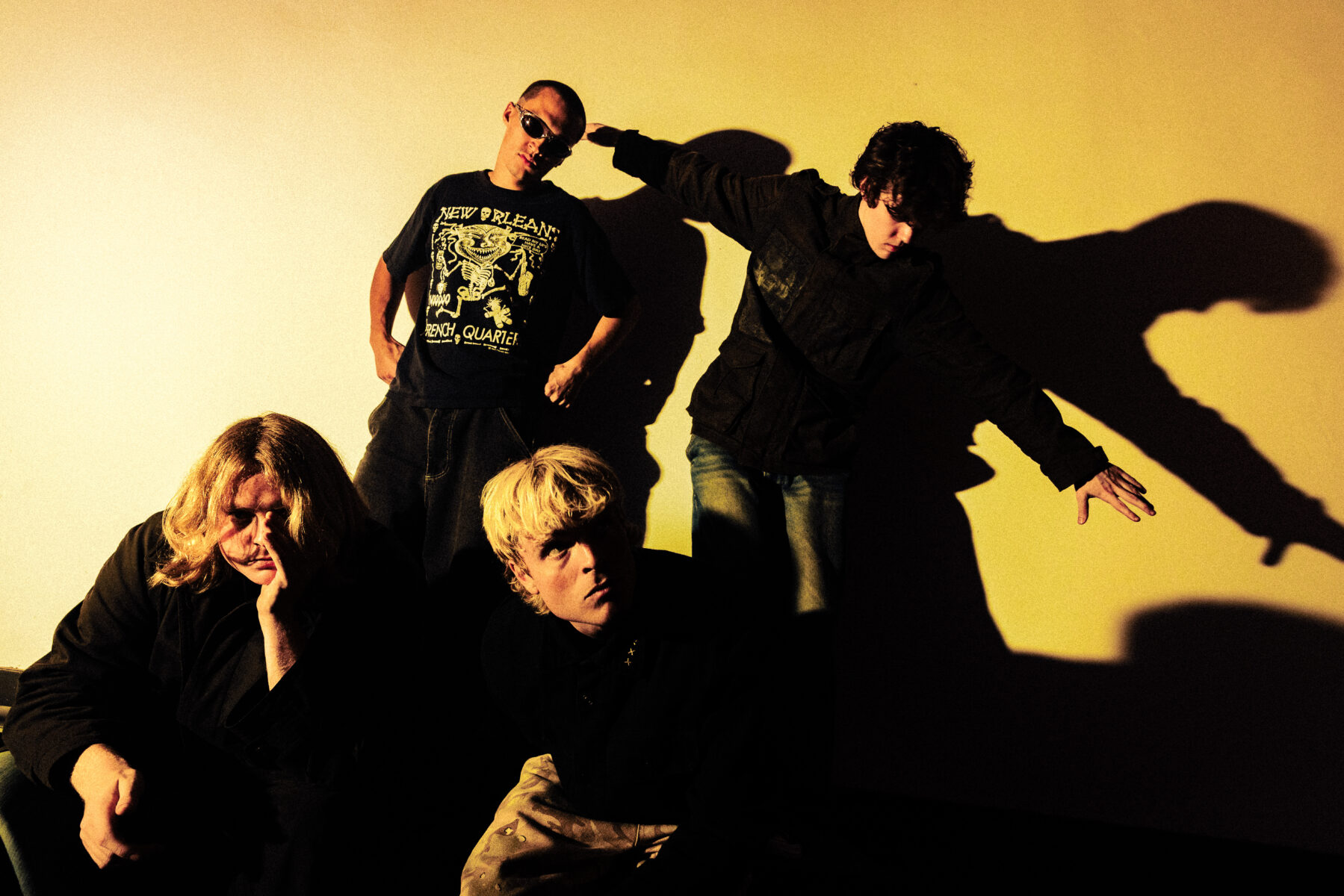
Young musicians like Keo have always sounded a little like the records they loved before eventually sounding more like themselves, but acknowledging influences isn’t in itself inauthentic. The more interesting question is what a band does with those influences once everybody has finished picking them apart.
Perhaps the least interesting thing we could do with a generation of young people genuinely excited about guitar music is to immediately teach them to be ashamed of that excitement.
Keogh has encountered the cooler version backstage, where bands occasionally end up in stand-offs because nobody wants to introduce themselves first. Everybody wants to be “the kids that don’t care”.
Keogh, as we’ve established, seems to care about almost everything.
Somewhere in our conversation about whether knowing too much about musicians destroys the magic, Keogh brings up Plato’s cave. His theory is that people prefer filling in the gaps. Know somebody through their records and you can imagine the person capable of making them; know every passing thought they’ve uploaded online and some of the mystique disappears.
“If people knew any artist really well, I don’t think their music would be seen the same.” The irony is that Keo is where Keogh feels least inclined to hide. “I’m more myself in every circumstance for Keo than I am in my social life.”
Onstage, he can be furious, miserable, ecstatic or insecure without sanding the emotion into something socially acceptable. For a genre with a long history of invented rock-star personas, Keogh has somehow found one that allows him to remove his. And, occasionally, he remembers he is supposed to be enjoying all of this. “This is our only debut album,” he says. “It’s only going to feel this exciting once.”
Naturally, Keo is already discussing album two. “God knows what the third record’s going to feel like.”
Before we finish, I ask Keogh the question I tend to end interviews with: if Put A Smile On For Me were somewhere we could physically enter, where would we be?
For once, he knows exactly. A field at night. No light pollution. Tall trees. Stars overhead and “a big blood moon or some shit”, which efficiently prevents the whole thing from becoming too romantic.
The field is real. Outside Bam Bam Studios, Keogh would take a Gibson acoustic into the cold, balance a recorder on the guitar and look up.
“I’d realise we’re all just these lost ants, essentially, wandering around the world.”
Now, he doesn’t think returning would work.
“I need to go somewhere new.”
By the time this is published, thousands more people will have heard what he made there.
They’ll decide what Keo represents, where they belong, and what they should do next. Keogh’s job is to forget they exist.
And find another field, apparently.
Listen to Put A Smile On For Me…
Words – Hannah Breen


